Bureaucracies and the State Department
Professor
Department of Political Science
011C Calvin Hall
meflynn@ksu.edu
2025-10-21
Historical Trends
What are bureaucracies?
Why do they matter?
The State Department
How did the foreign policy bureaucracy change between the pre- and post-War periods?
Why/How might suboptimal policy outcomes result from otherwise good actors following organizational mandates?
How are actors at different positions in a bureaucratic hierarchy able to exercise power and influence?
How has the State Department’s role in foreign policymaking changed over time?
Executive bureaucracy before World War II
Very small
Creation of the Executive Office of the President (EOP) in 1939
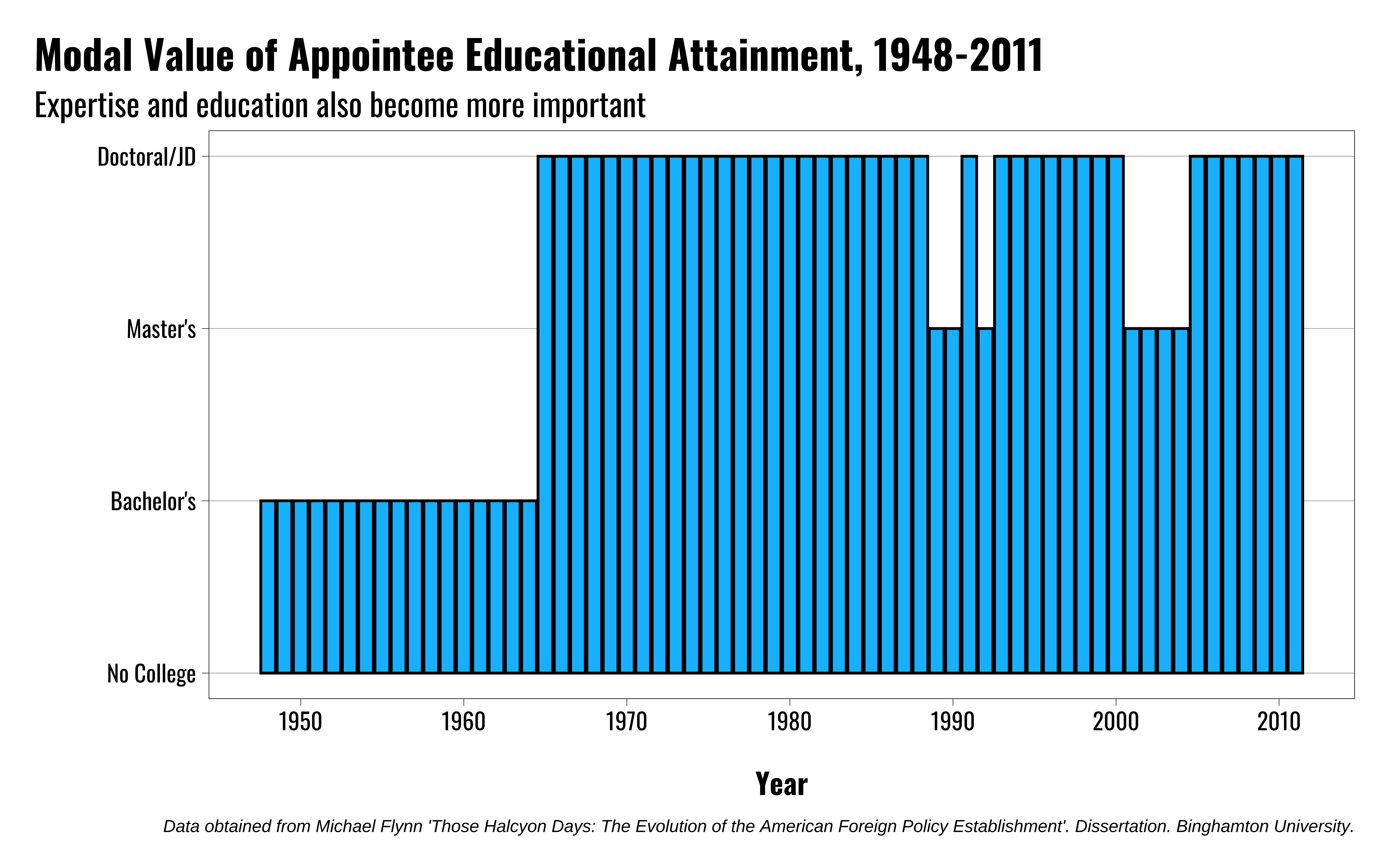
Foreign policy activism spurs demand for personnel, expertise
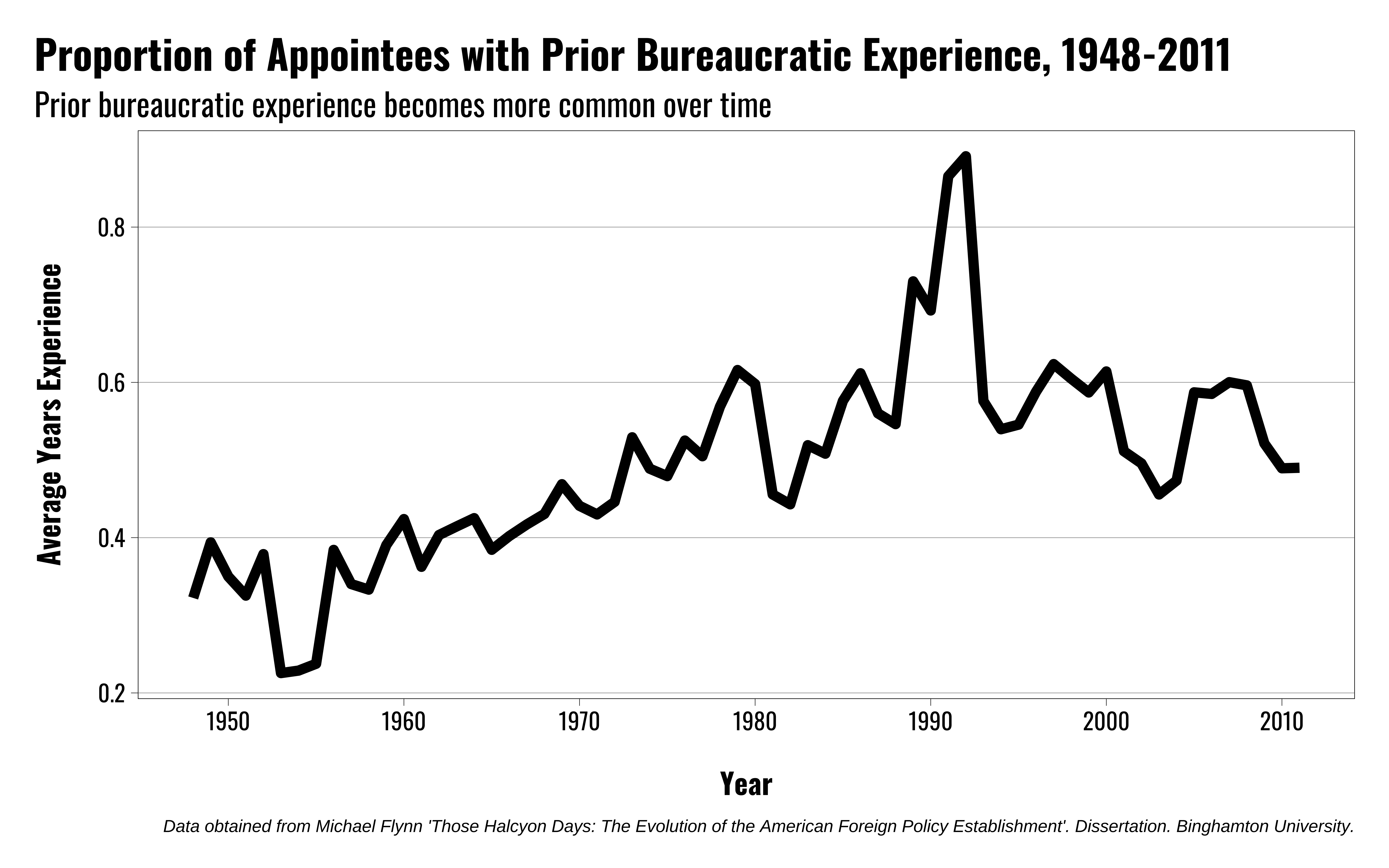
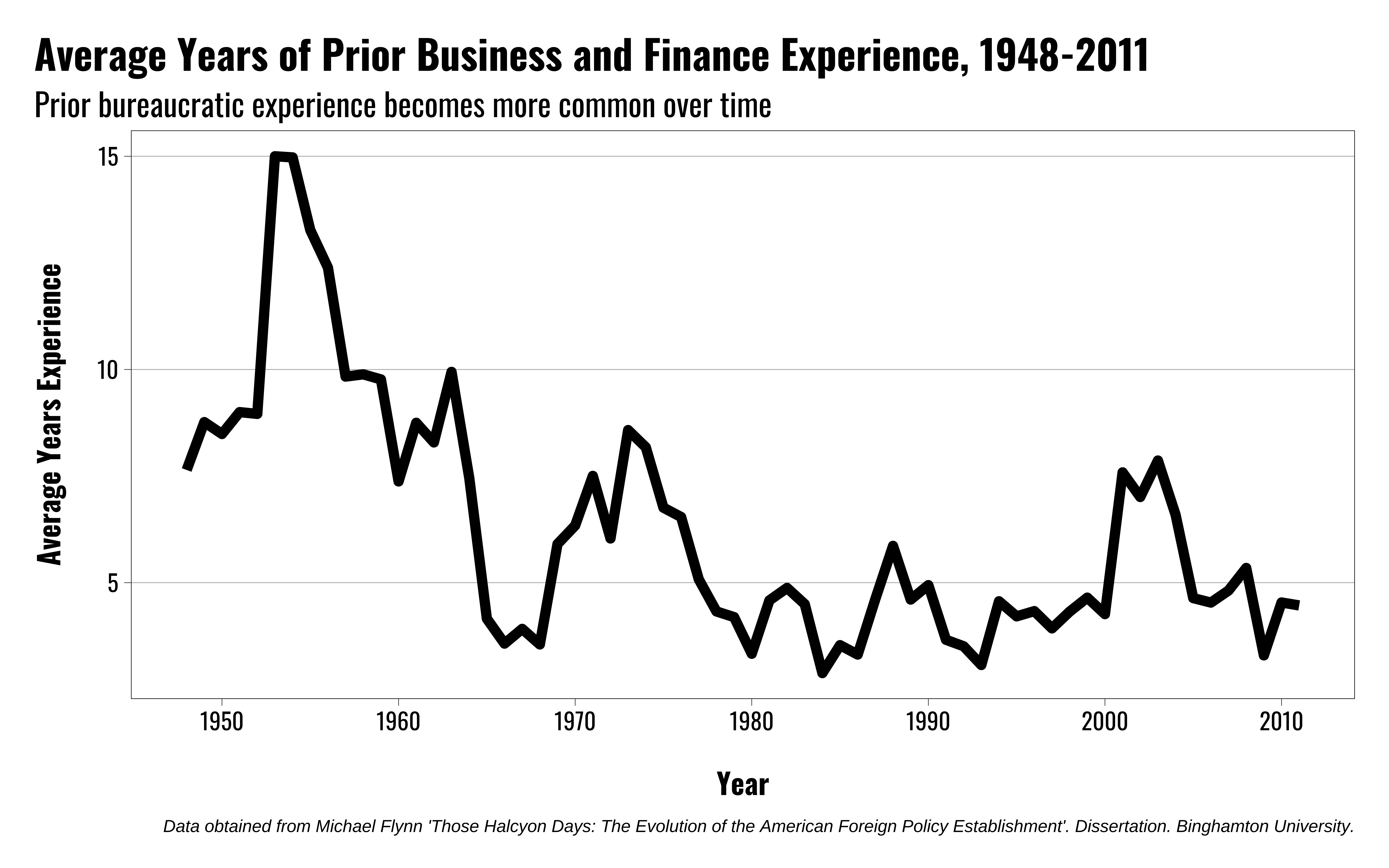
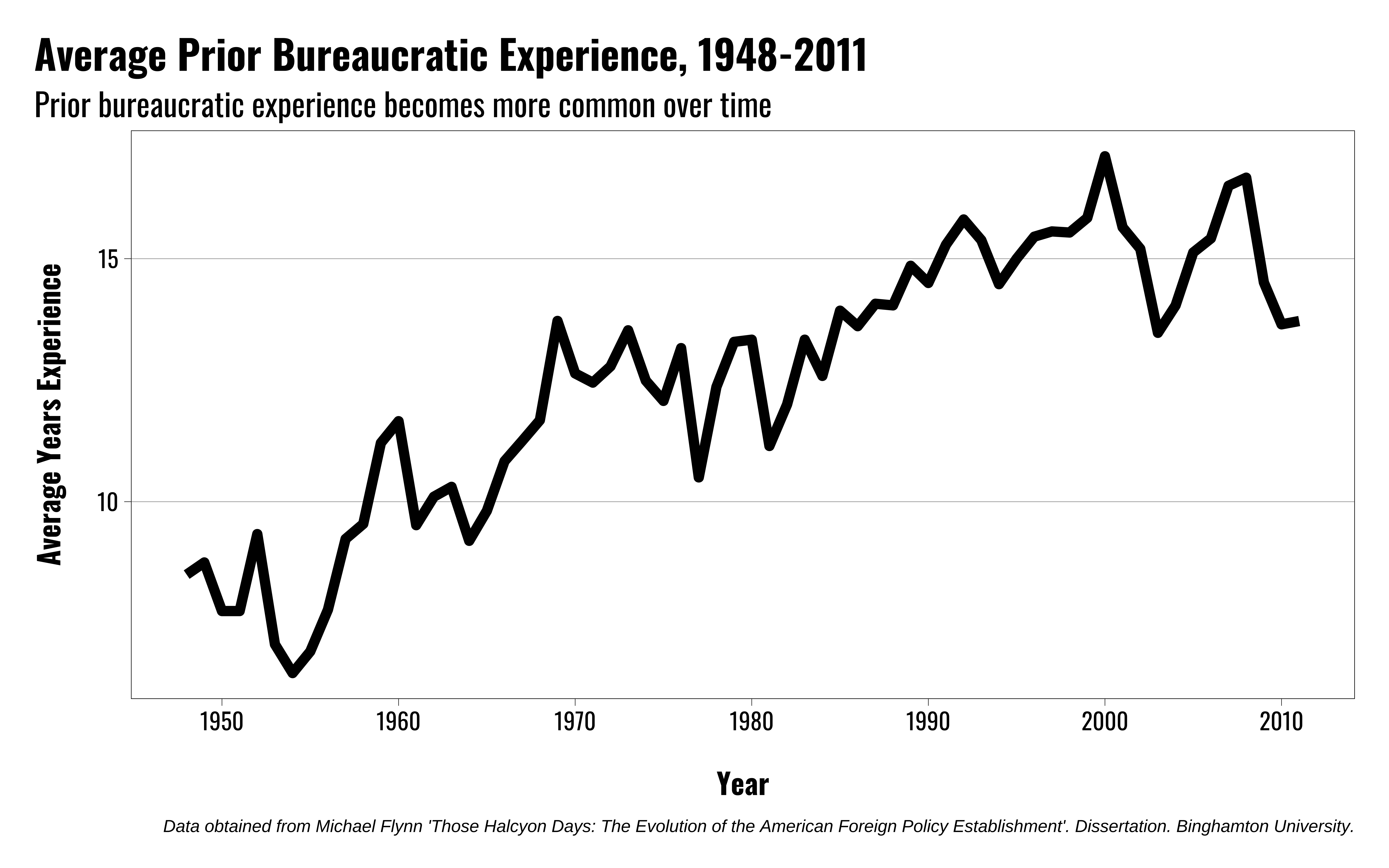
Senior administrators up through World War II general had little government experience
Bureaucracy didn’t become a “career” until post-1940s


What they do:
Day-to-day management and operations of the government
Help to formulate policies
Provide expertise and advice in different policy areas
Coordinate actions of various bureaucratic actors
Execute and implement policies
Functional Differentiation:
The specialization of different governmental units
Works at different levels:
State Department vs Defense Department
Navy vs Army
Artillery vs Armor
Different bureaucratic agencies
Bureaucracy has a reputation for redundancy…
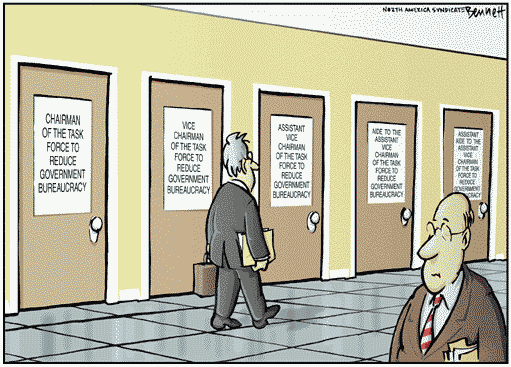
And waste…


They’re responsible for a lot…
Presidents make thousands of appointments after entering office
Hundreds of these relate to foreign policymaking
Direct presidential involvement varies
Personal taste
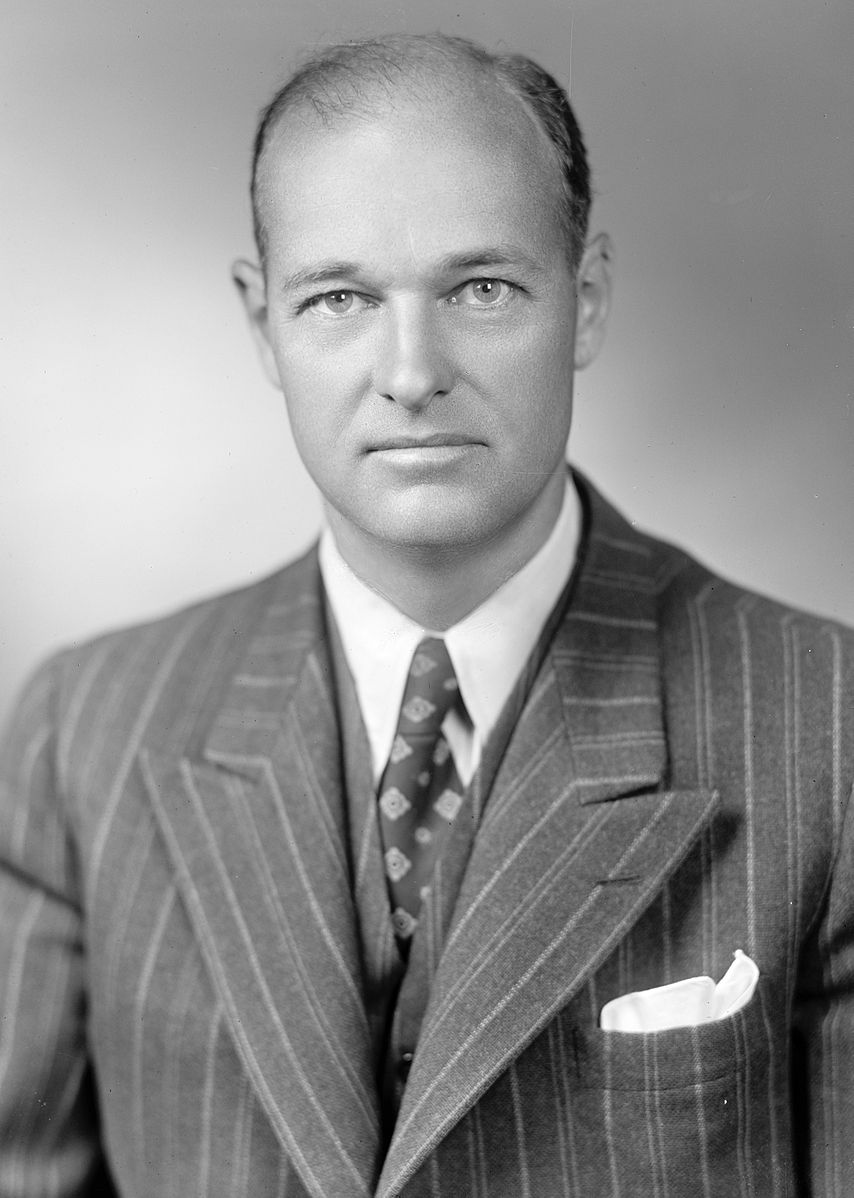
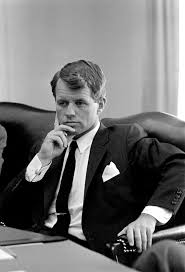
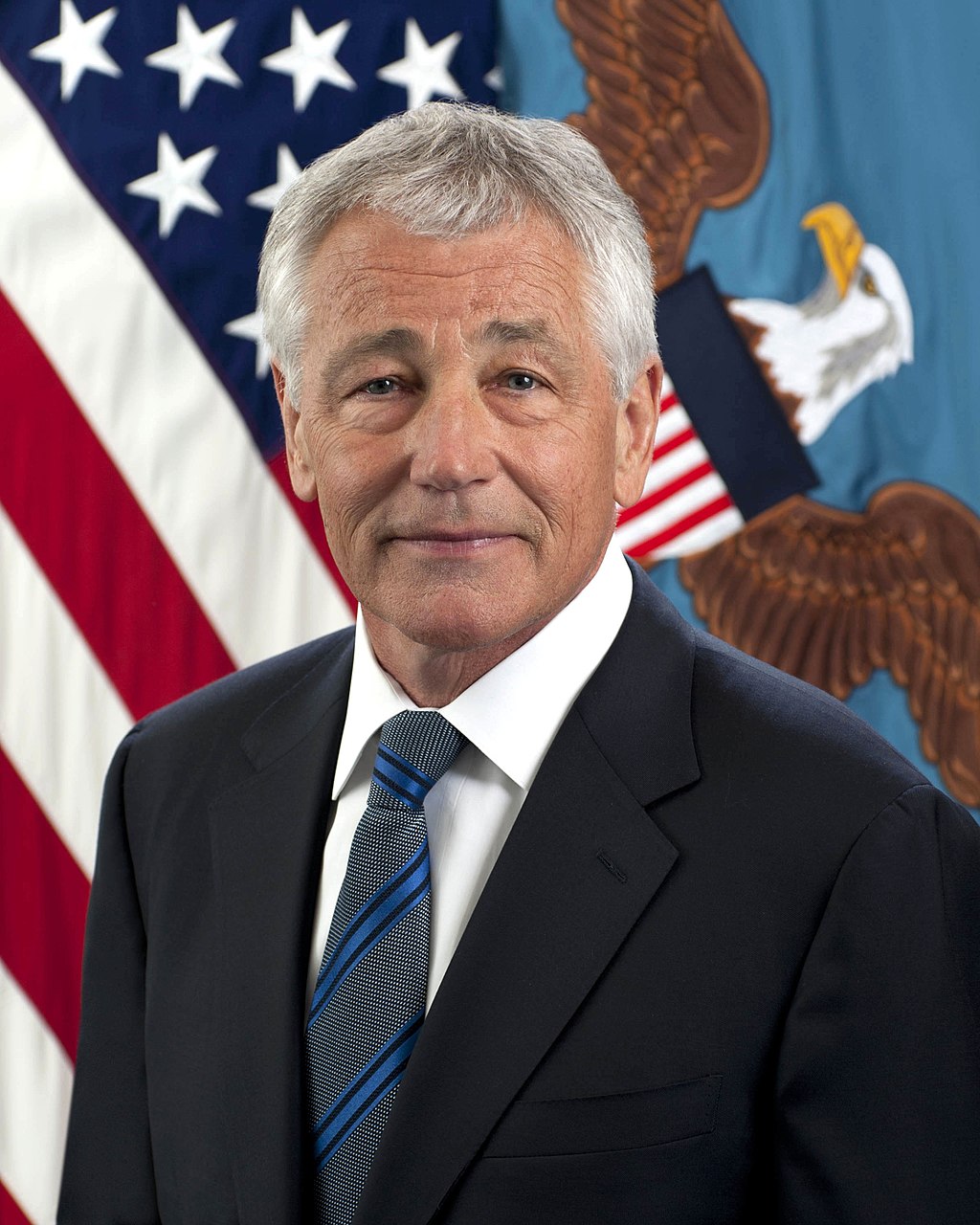
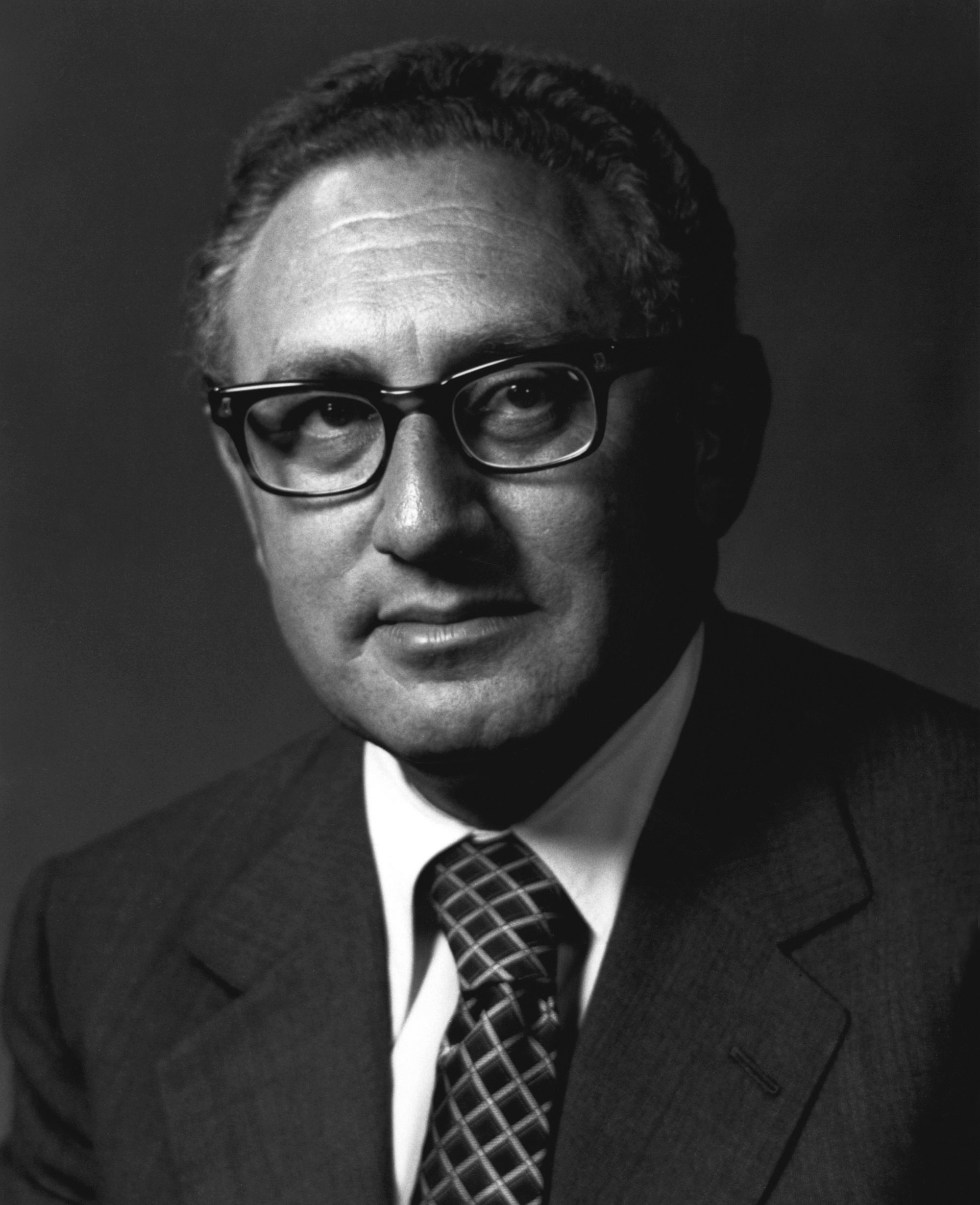
Big three: State, Defense, Treasury
Subordinates?
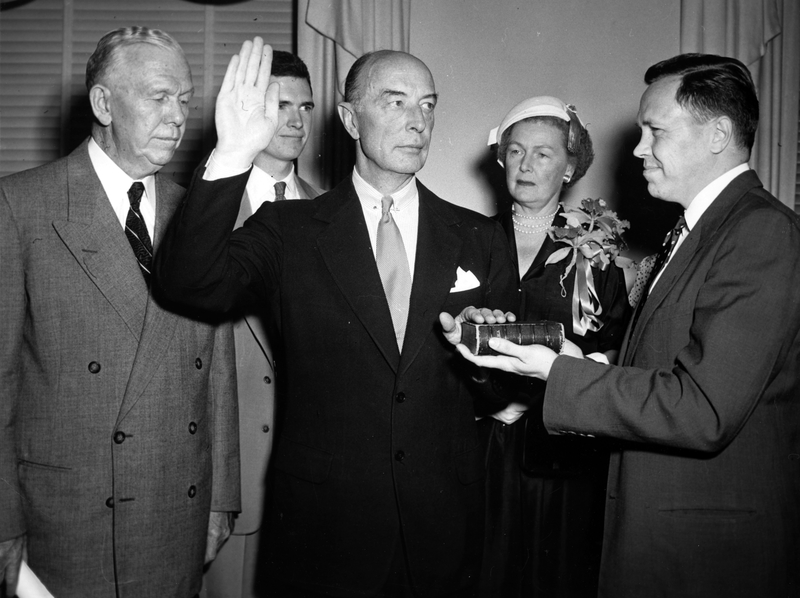
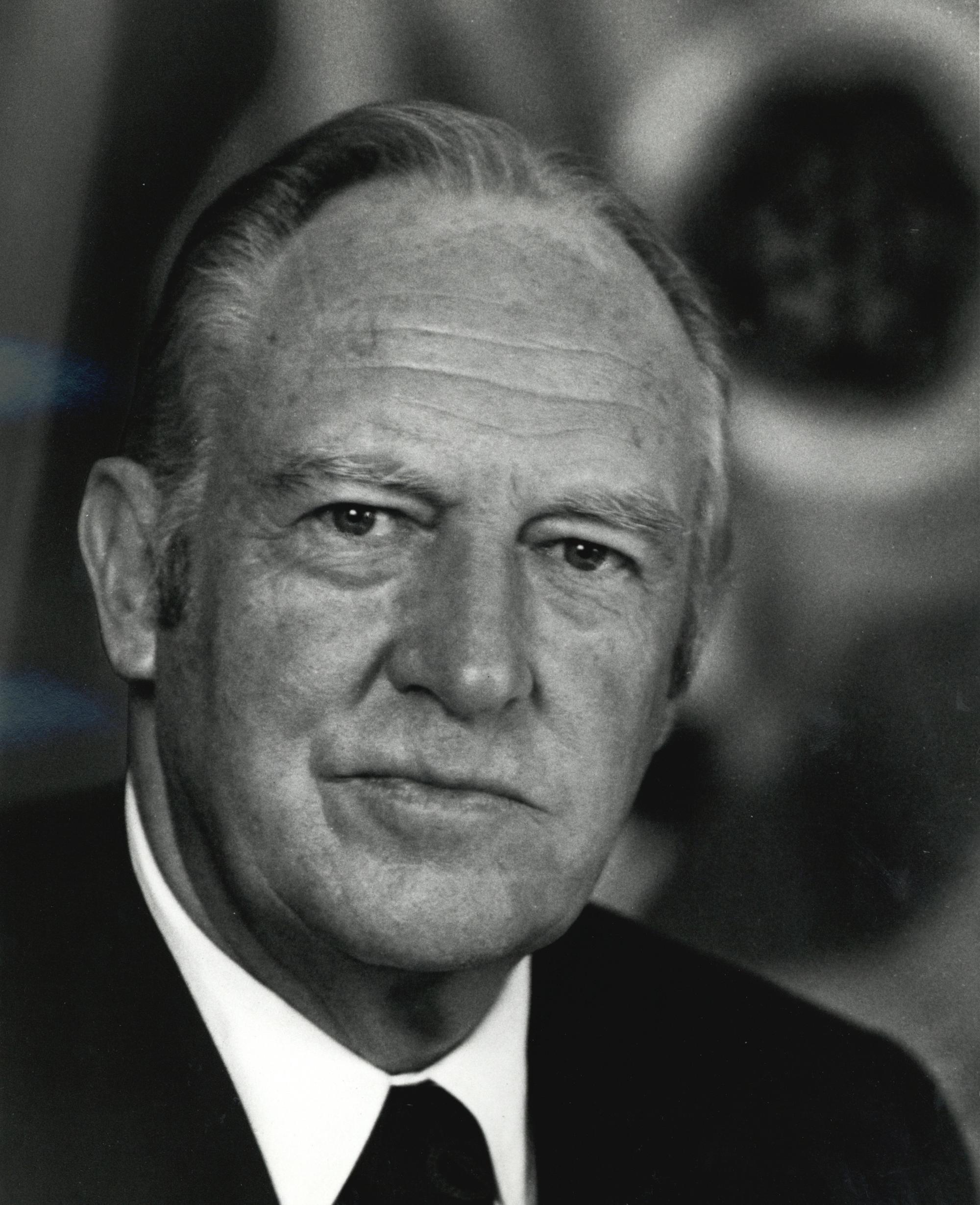
Robert Lovett:
Undersecretary of State
Deputy Secretary of Defense
Secretary of Defense
Lovett was given his choice of State, Defense, or Treasury by President Kennedy.
To right: Robert Lovett (a Republican) is sworn in as President Truman’s (a Democrat) Secretary of Defense on September 17, 1951.
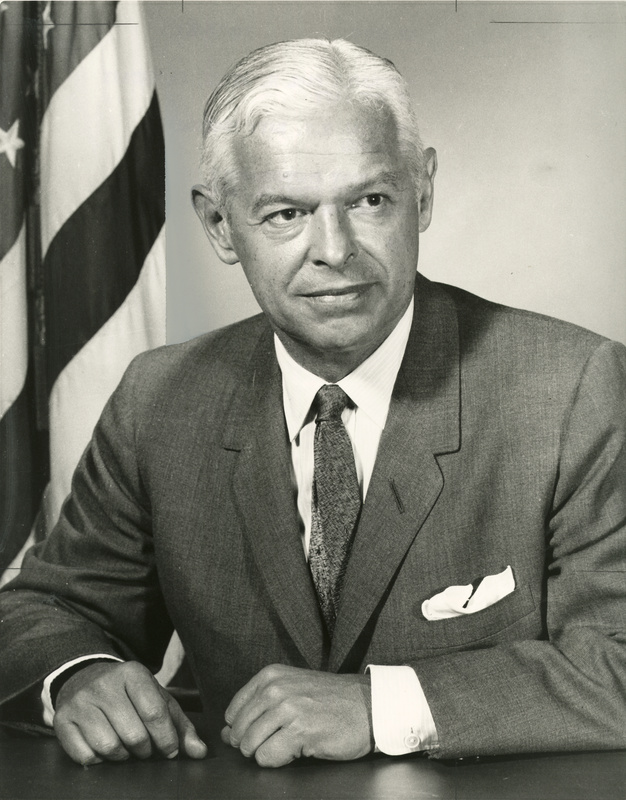
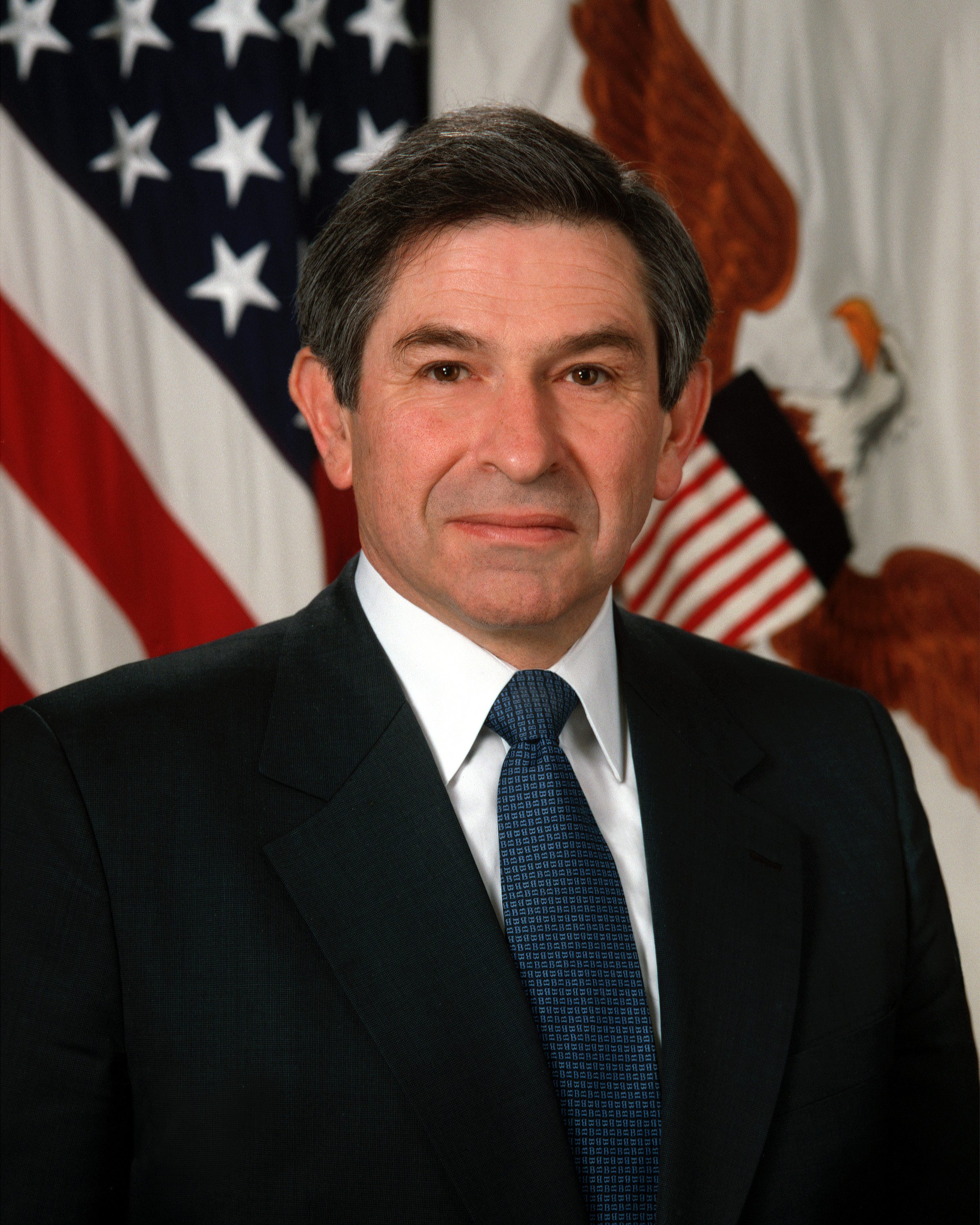
Paul Nitze:
Secretary of the Navy
Assistant Secretary of Defense for International Security Affairs
Director of State Department Policy Planning Staff
Deputy Secretary of Defense
Principal author of NSC-68
Power and influence
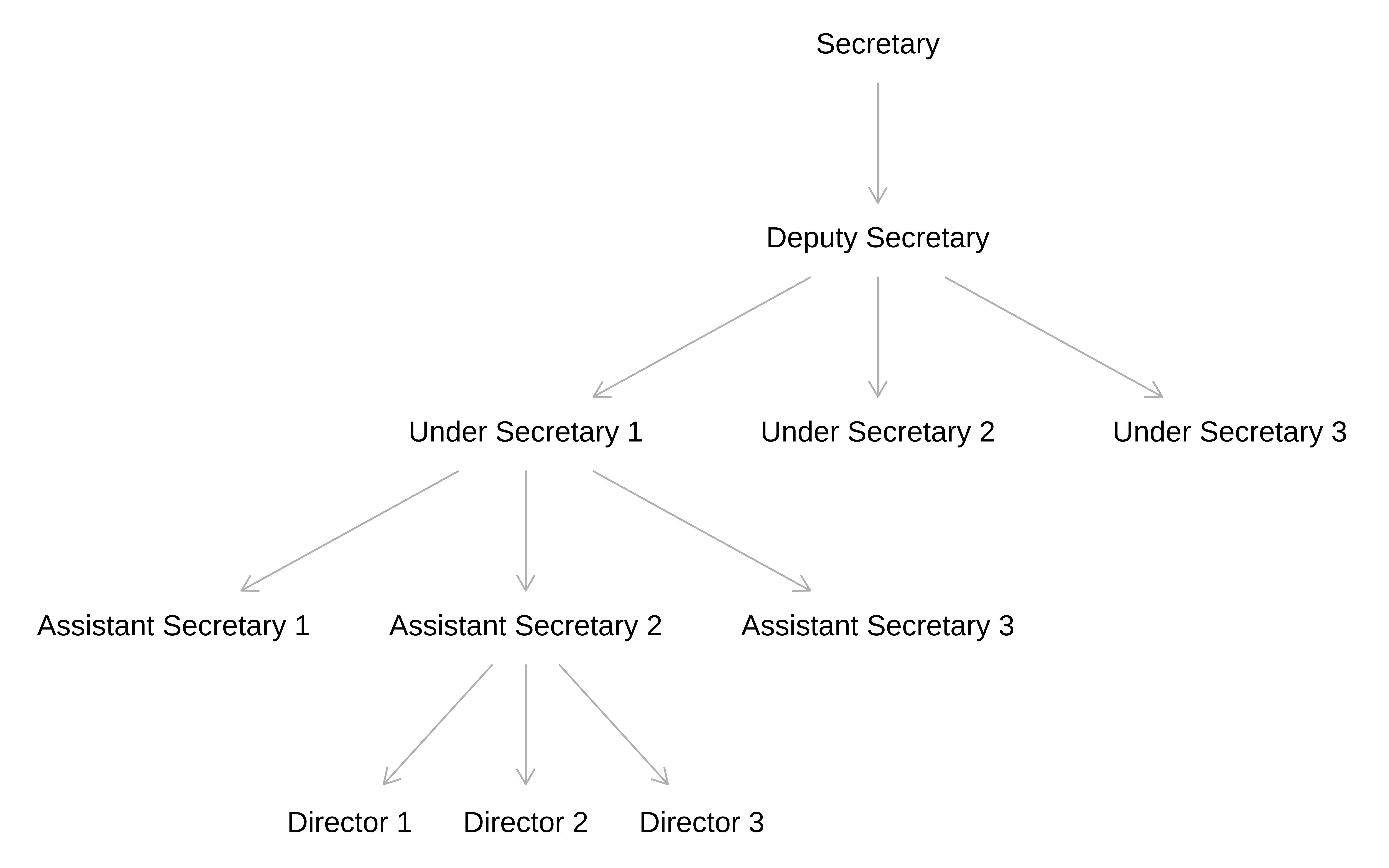
Principals
Deputies
Issue Area
Prestige
Position in bureaucratic hierarchy doesn’t always match influence


Fulfill organization’s basic operational mandates/missions
Advance the interests of their organization
Fulfill basic responsibilities of individual position
Advance personal interests and power
Capture
Stove-piping
Groupthink
Turf battles
Slow adaptation


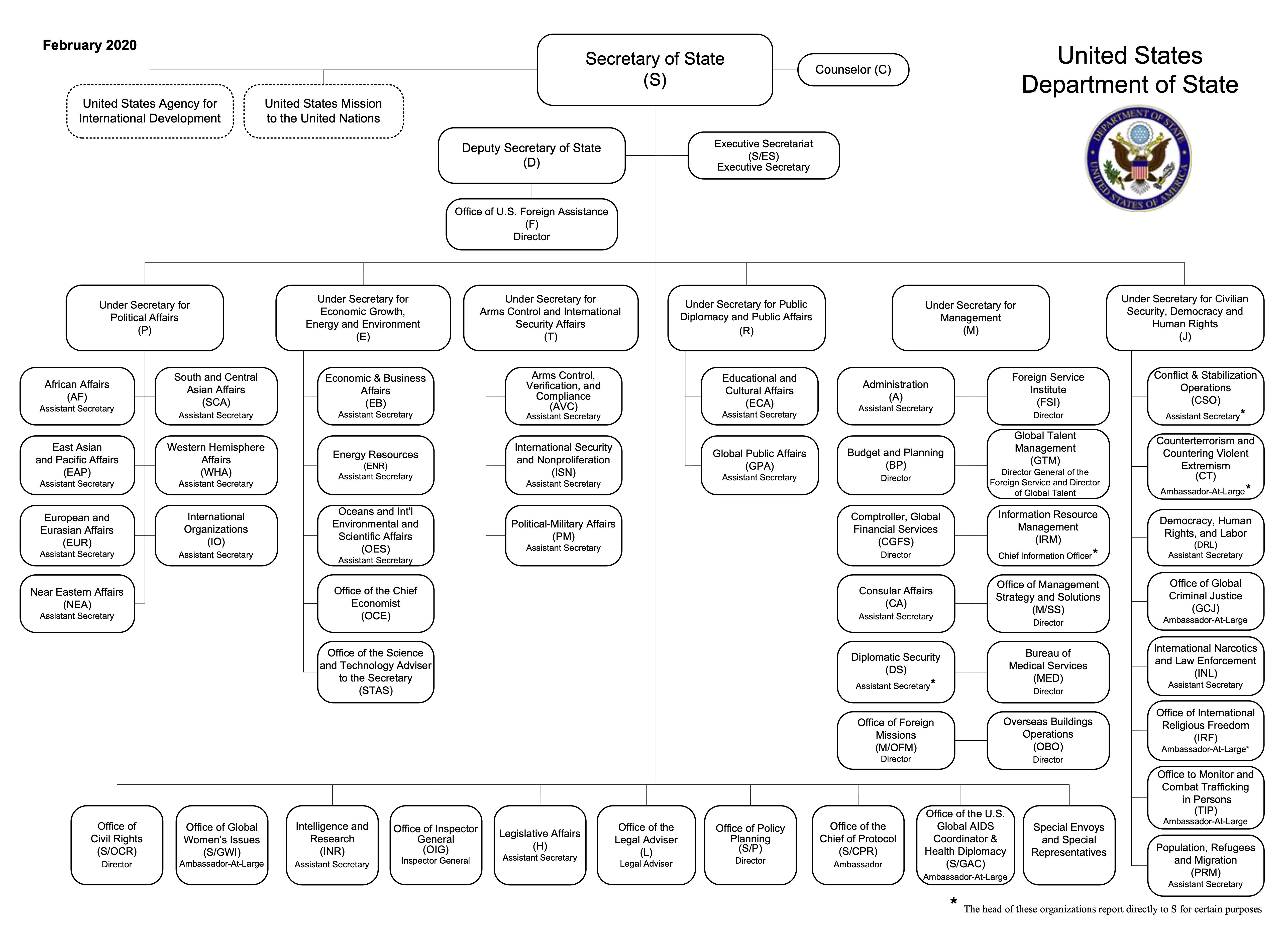
The Secretary of State is the chief diplomat of the Untied States
Supposed to be the principal adviser to the president on foreign affairs
Provides expertise and information on a variety of policy questions and geographic areas
Responsible for embassies and diplomats around the world
Also administers immigration and visa policies
Secretary of State
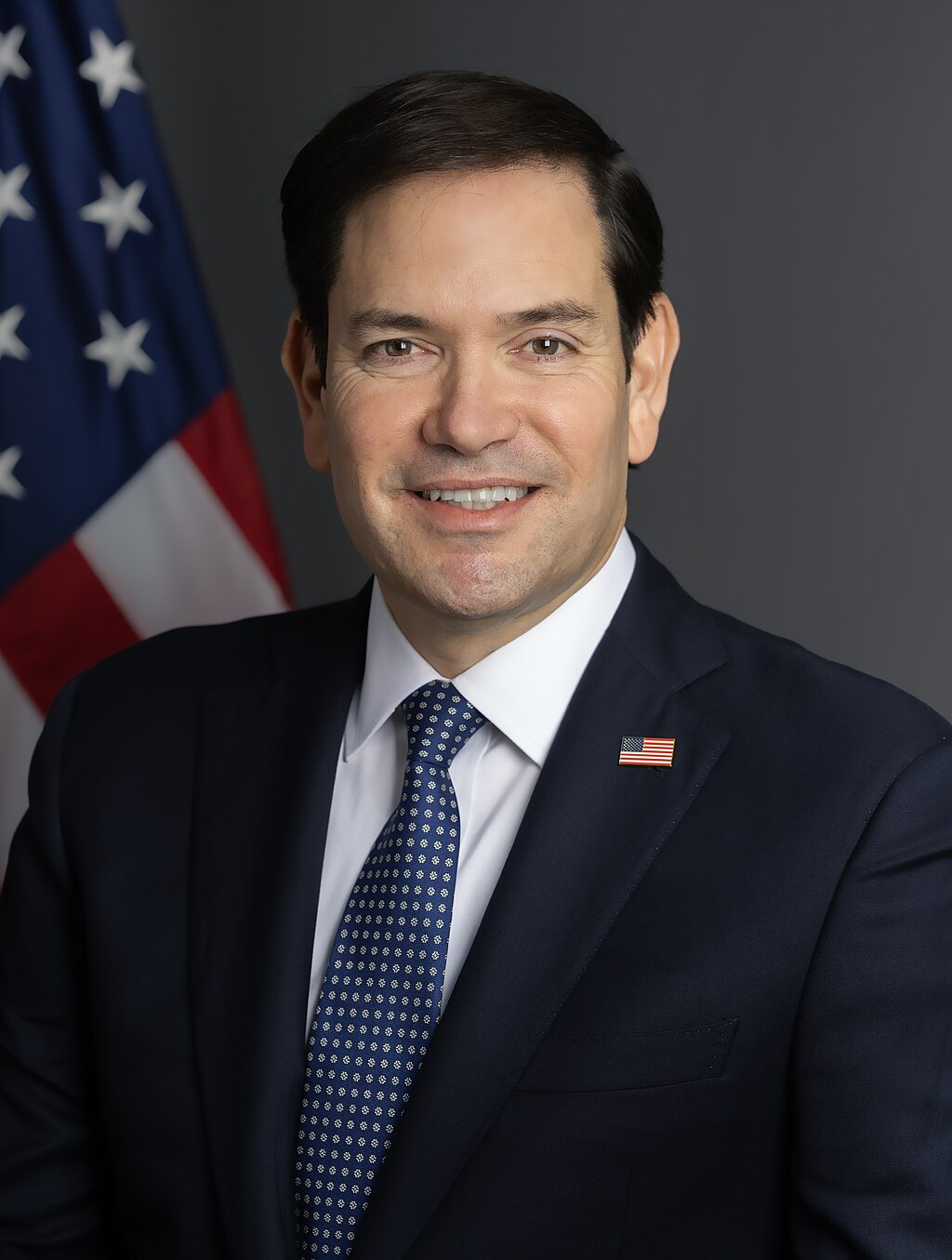
Current Secretary: Marco Rubio - Former US Senator from Florida - Elected to Senate in 2010 - Ran for Republican presidential nomination in 2016 - Served on the Senate Foreign Relations Committee
Ambassadors
Position of ambassador is relatively new
Created in 1893
“Minister” was formerly the highest ranking diplomatic position for the United States
Ambassadorships awarded to country/region exports, but also to political allies
To right: Former US Ambassador to the United Kingdom, Matthew Barzun. Barzun also worked on President Obama’s campaign.

Historically the primary foreign policymaking body
Secretaries of State were very influential
Prominent officeholders include:

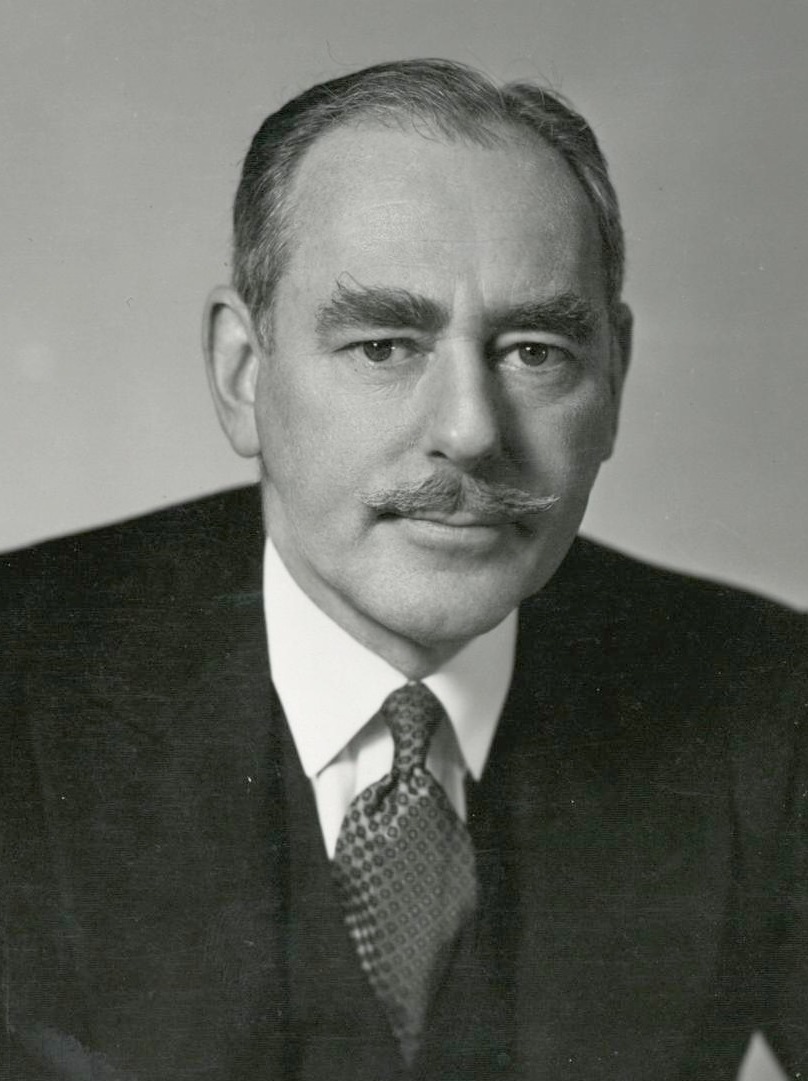
Dean Acheson
Secretary of State Under President Truman
Epic Mustache
Targeted during the Red Scare by Congressional Republicans. The State Department was the subject of intense criticism by Republicans who claimed that communists had infiltrated the US government.
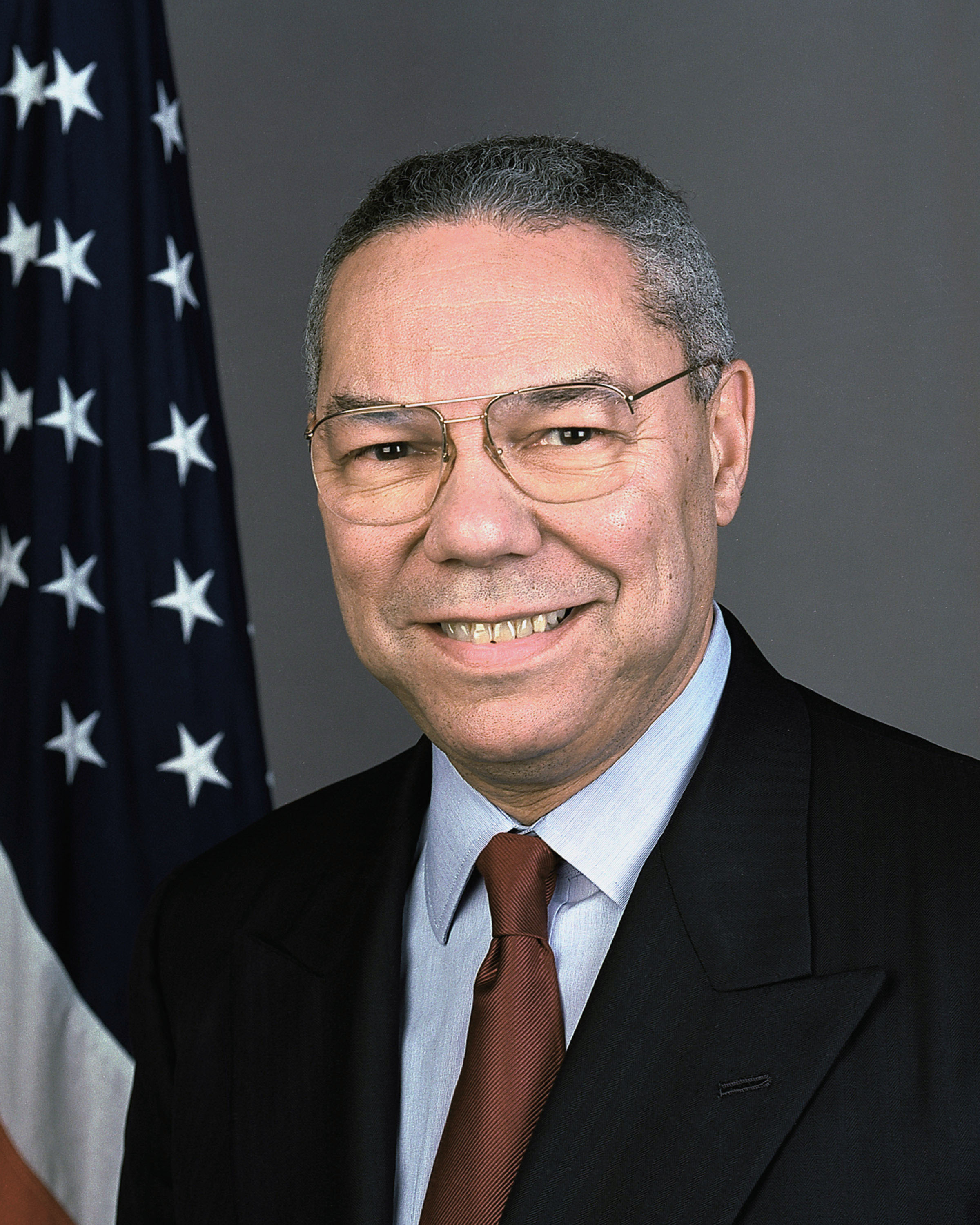
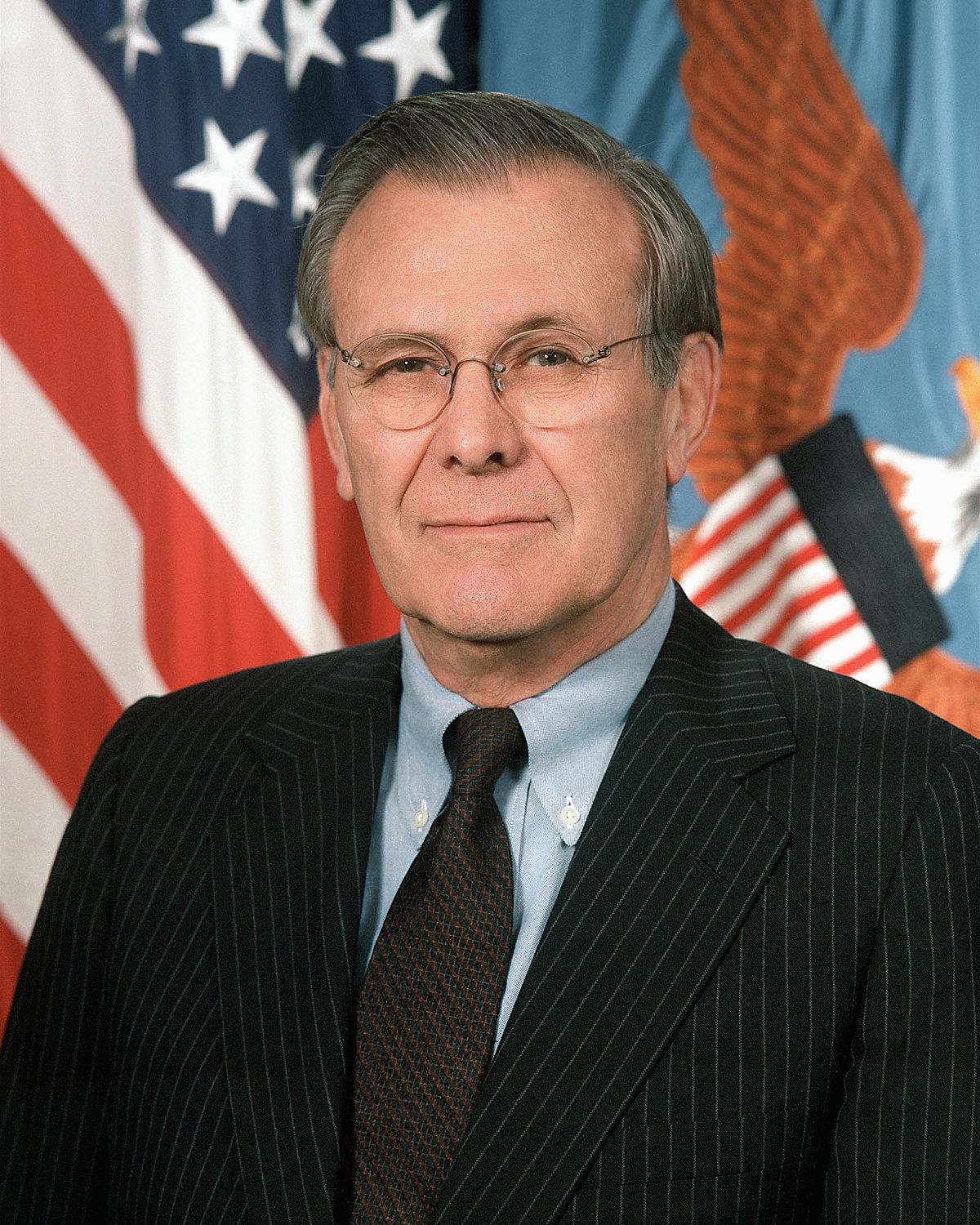

State in decline
Basic organizational mandate
Organizational structure
Emphasized qualities of Foreign Service Officers
Gaps between Washington and local offices
Growth of alternative organizations/offices
United States Agency for International Development (USAID)
Created by the Foreign Assistance Act of 1961
Dismantled by Trump Administration DOGE cuts in 2025
Responsible for administering civilian foreign aid and development assistance
Consolidated previous existing foreign aid programs
SEC. 101. [22 U.S.C. 2151] GENERAL POLICY.—(a):
The Congress finds that fundamental political, economic, and technological changes have resulted in the interdependence of nations. The Congress declares that the individual liberties, economic prosperity, and security of the people of the United States are best sustained and enhanced in a community of nations which respect individual civil and economic rights and freedoms and which work together to use wisely the world’s limited resources in an open and equitable international economic system. Furthermore, the Congress reaffirms the traditional humanitarian ideals of the American people and renews its commitment to assist people in developing countries to eliminate hunger, poverty, illness, and ignorance.
Therefore, the Congress declares that a principal objective of the foreign policy of the United States is the encouragement and sustained support of the people of developing countries in their ef- forts to acquire the knowledge and resources essential to development and to build the economic, political, and social institutions which will improve the quality of their lives.