US Foreign Policy

Security Cooperation

Michael Flynn

Professor

Department of Political Science

011C Calvin Hall

meflynn@ksu.edu

2025-11-05

Lecture Overview

  1. What is security cooperation?

  2. Alliances

  3. Military deployments

  4. Why do states cooperate?

  5. Effects of security cooperation

Key Questions

  1. Why do states form alliances?

  2. How do allies help redistribute the costs of war?

  3. Why do states host military deployments?

  4. What is the relationship between economic interests and security cooperation?

  5. What are the differences between bilateral vs. multilateral security relationships?

  6. What are the tradeoffs associated with the United States’ security relationships?

Key Concepts

  1. Security cooperation

  2. Alliance

  3. Military deployment

  4. Burden sharing

  5. Security-sovereignty or security-autonomy tradeoff

What is security cooperation?

What is security cooperation?

States may not agree on everything, but they often have shared interests

  • Security cooperation involves states working together to promote their individual and joint security interests

  • This can involve different sorts of activities:

    • Forming a military alliance
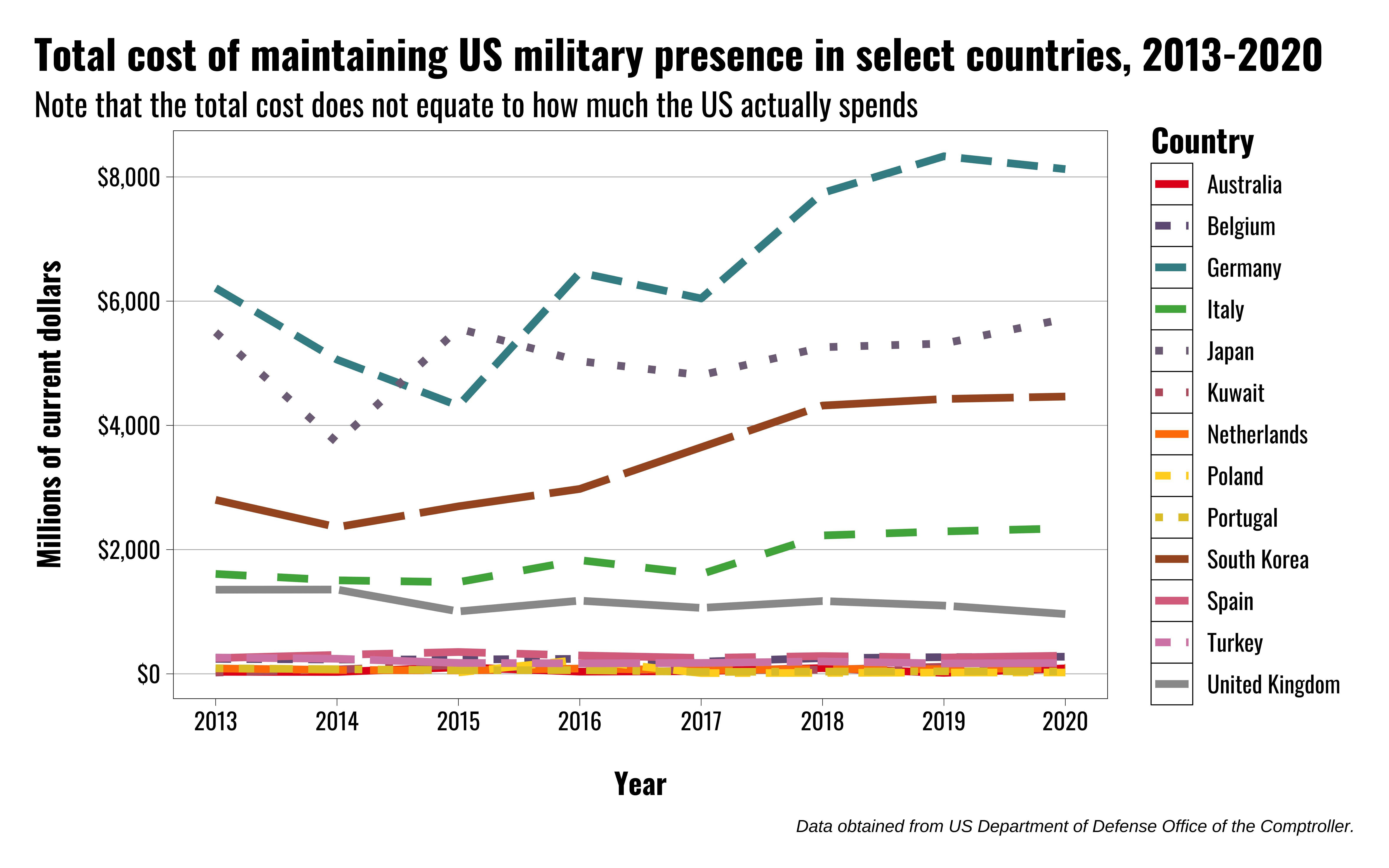
    • Hosting foreign military deployments
    • Military and economic aid
    • Military training and exercises
    • Professional military education
    • Sharing intelligence information

What is security cooperation?

States may not agree on everything, but they often have shared interests

  • Security cooperation involves states working together to promote their individual and joint security interests

  • This can involve different sorts of activities:

    • Forming a military alliance
    • Hosting foreign military deployments
    • Military and economic aid
    • Military training and exercises
    • Professional military education
    • Sharing intelligence information

Military Alliances

Military Alliances

.medium[ What are military alliances?

Alliance Treaty Obligations and Provisions (ATOP) project defines alliances as:

[W]ritten agreements, signed by official representatives of at least two independent states, that include promises to aid a partner in the event of military conflict, to remain neutral in the event of conflict, to refrain from military conflict with one another, or to consult/cooperate in the event of international crises that create a potential for military conflict

]

Military Alliances

Dimensions of alliances:

Commitment level (Depth)

  1. Defense
  2. Offense
  3. Neutrality
  4. Non-aggression
  5. Consultation

Membership (Breadth)

  1. Bilateral
  2. Multilateral

Relative capabilities (Power)

  1. Symmetric
  2. Asymmetric

Military Deployments

Military Deployments

Let’s define them first

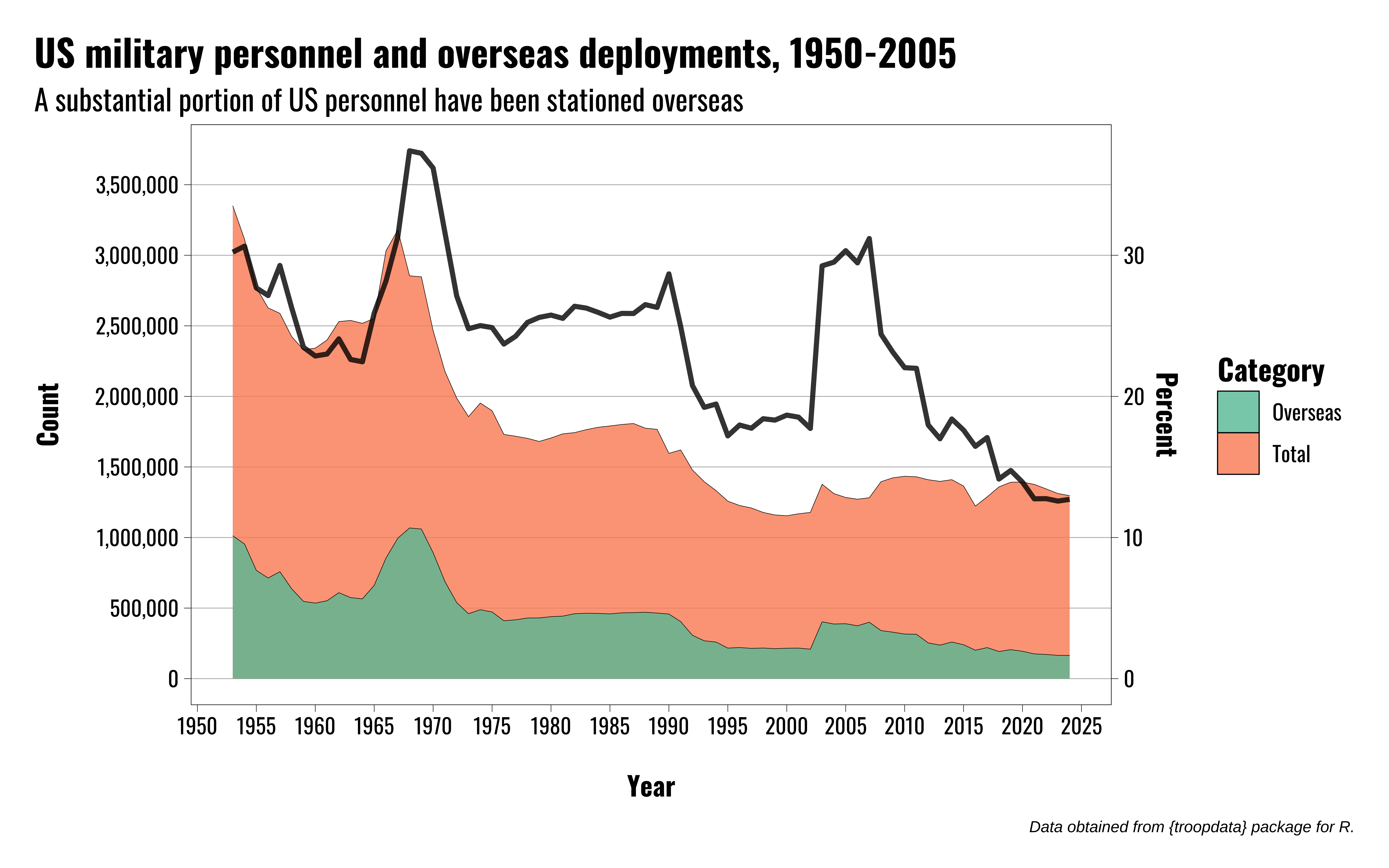
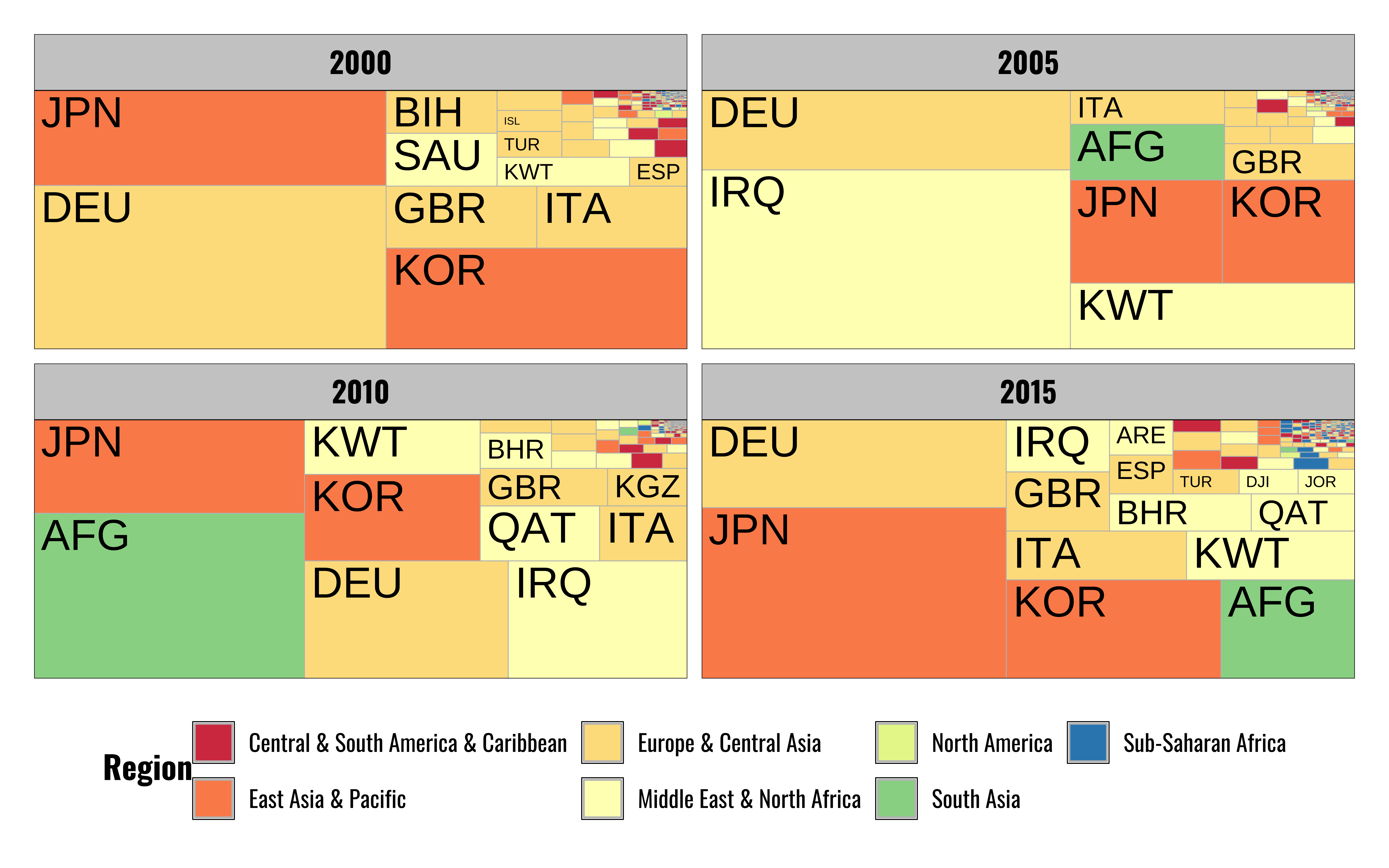
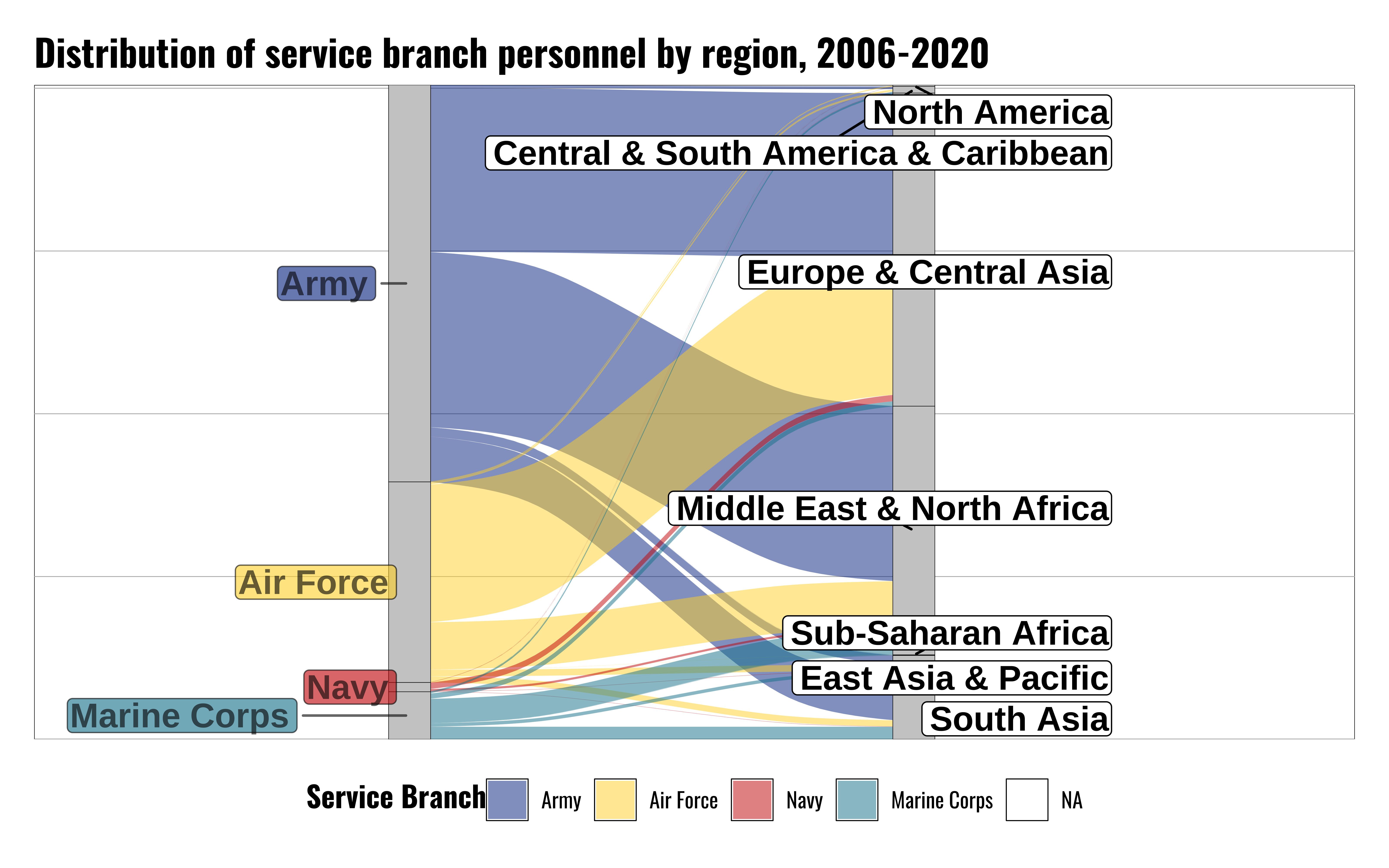
The permanent or temporary placement of military personnel and assets in a location outside of the United States and its territories.

Different types:

  • Combat deployments
    • Large ground, air, and/or sea assault missions
    • Occupation and reconstruction missions
    • Smaller special operations forces
  • Non-combat deployments
    • Military exercises
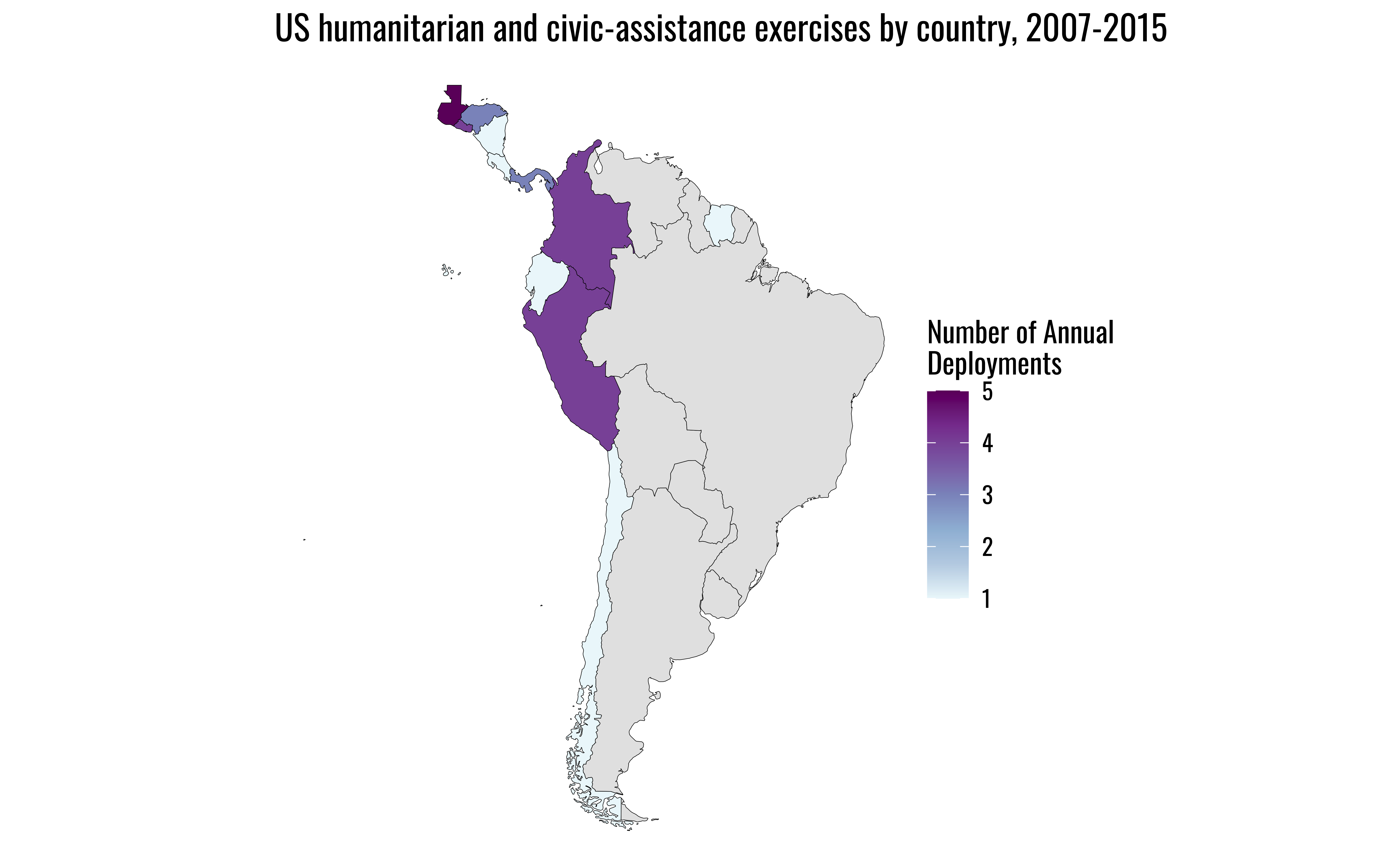
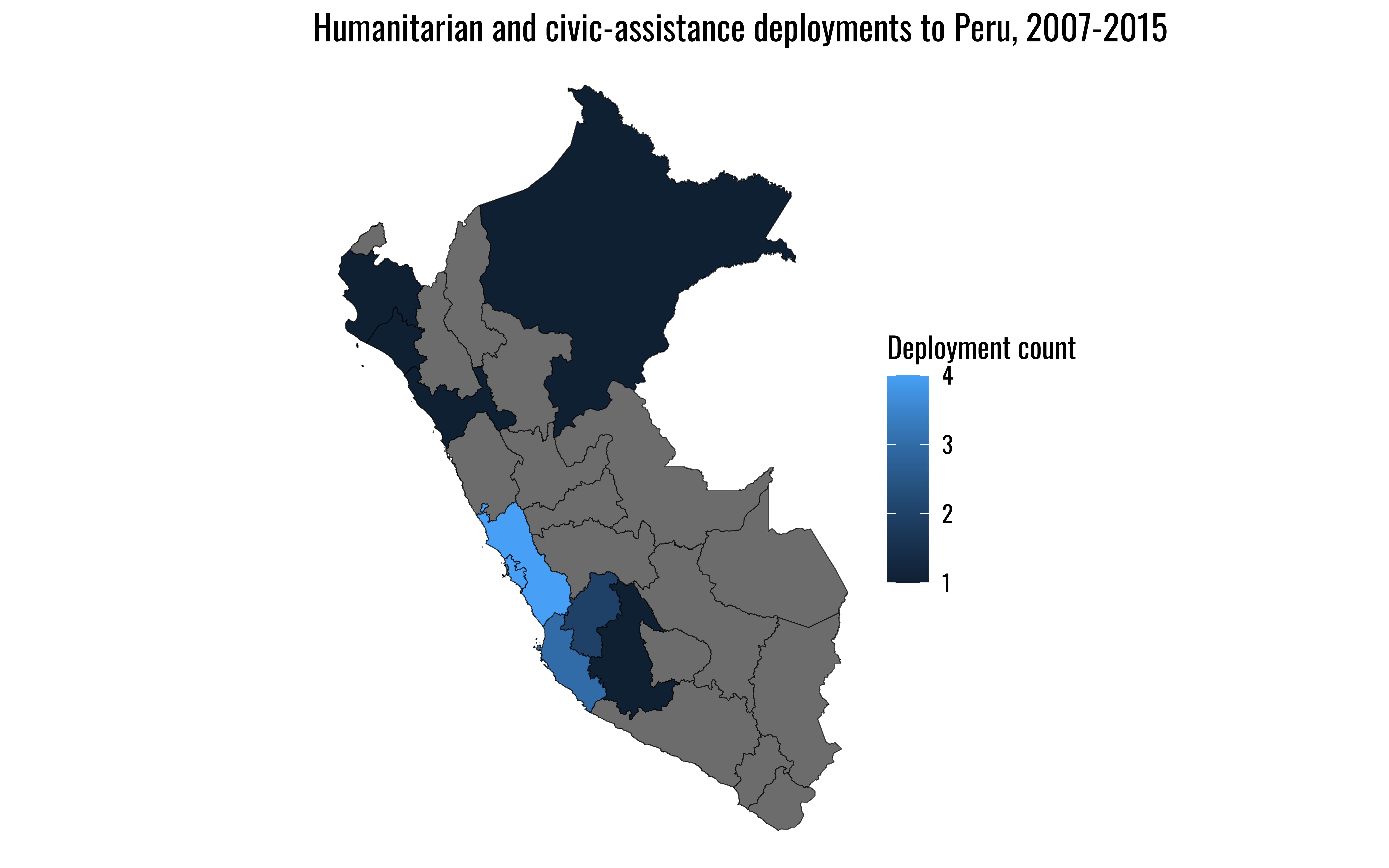
    • Humanitarian and civic-assistance exercises
    • Humanitarian and disaster relief
    • Professional military education (sort of)
  • Marine Embassy Guards/Marine Security Guard

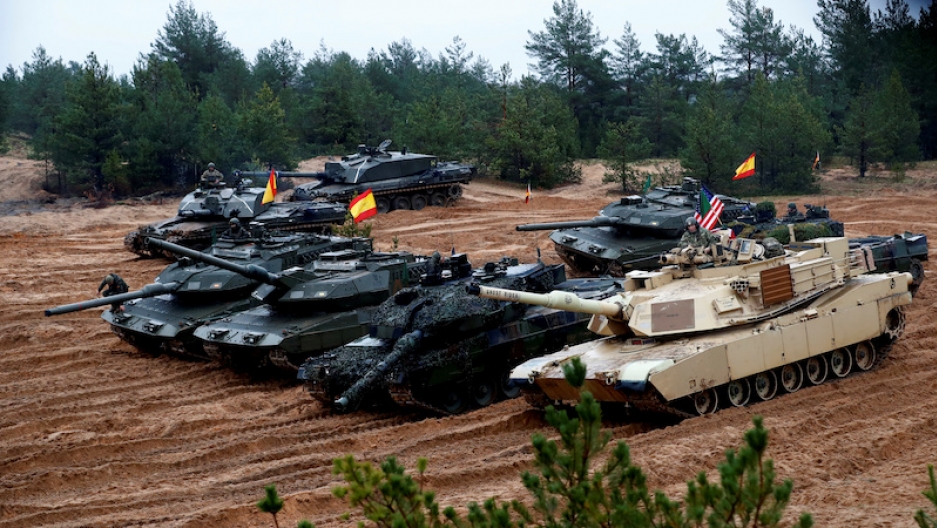
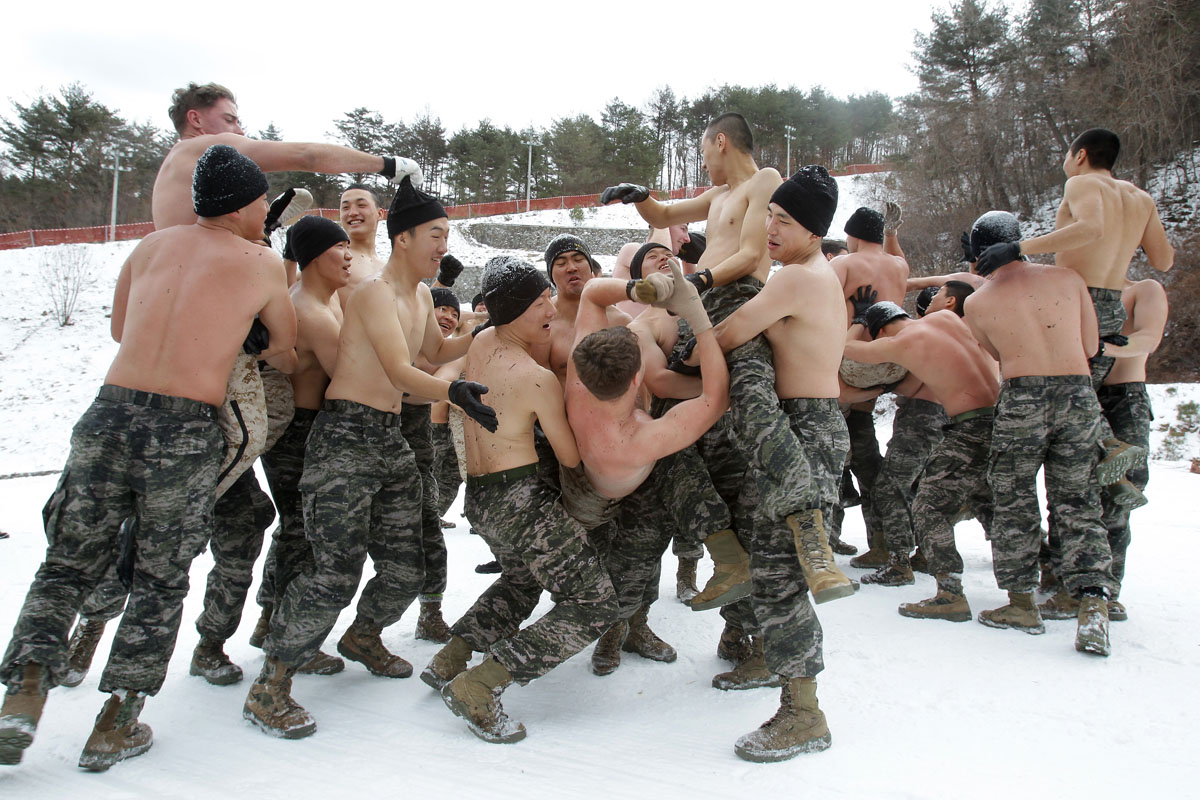
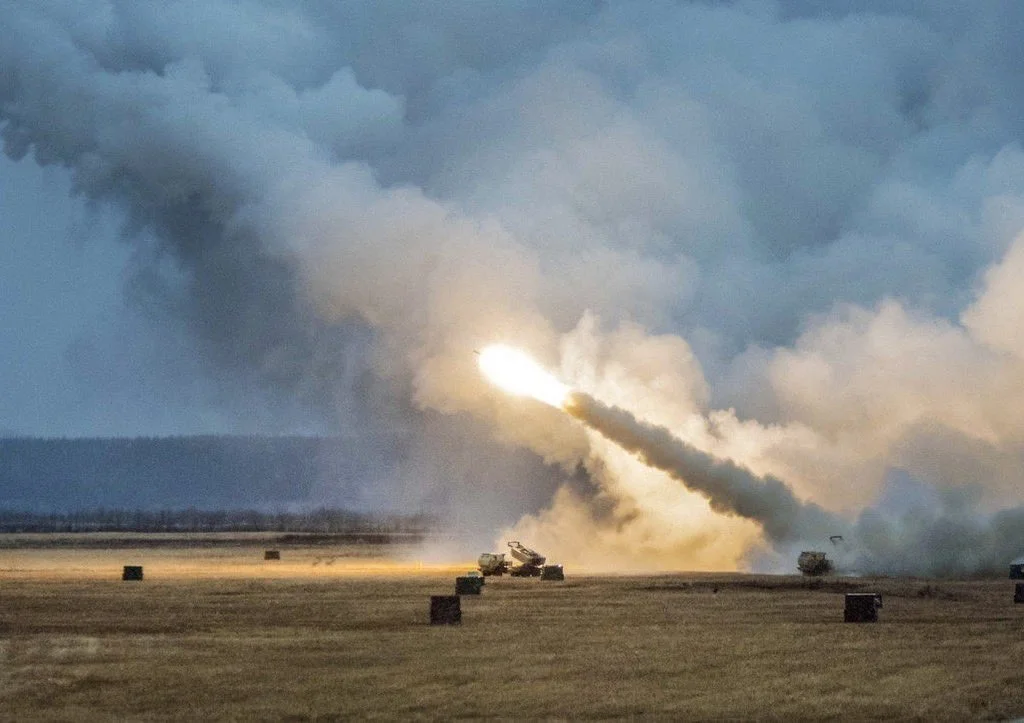
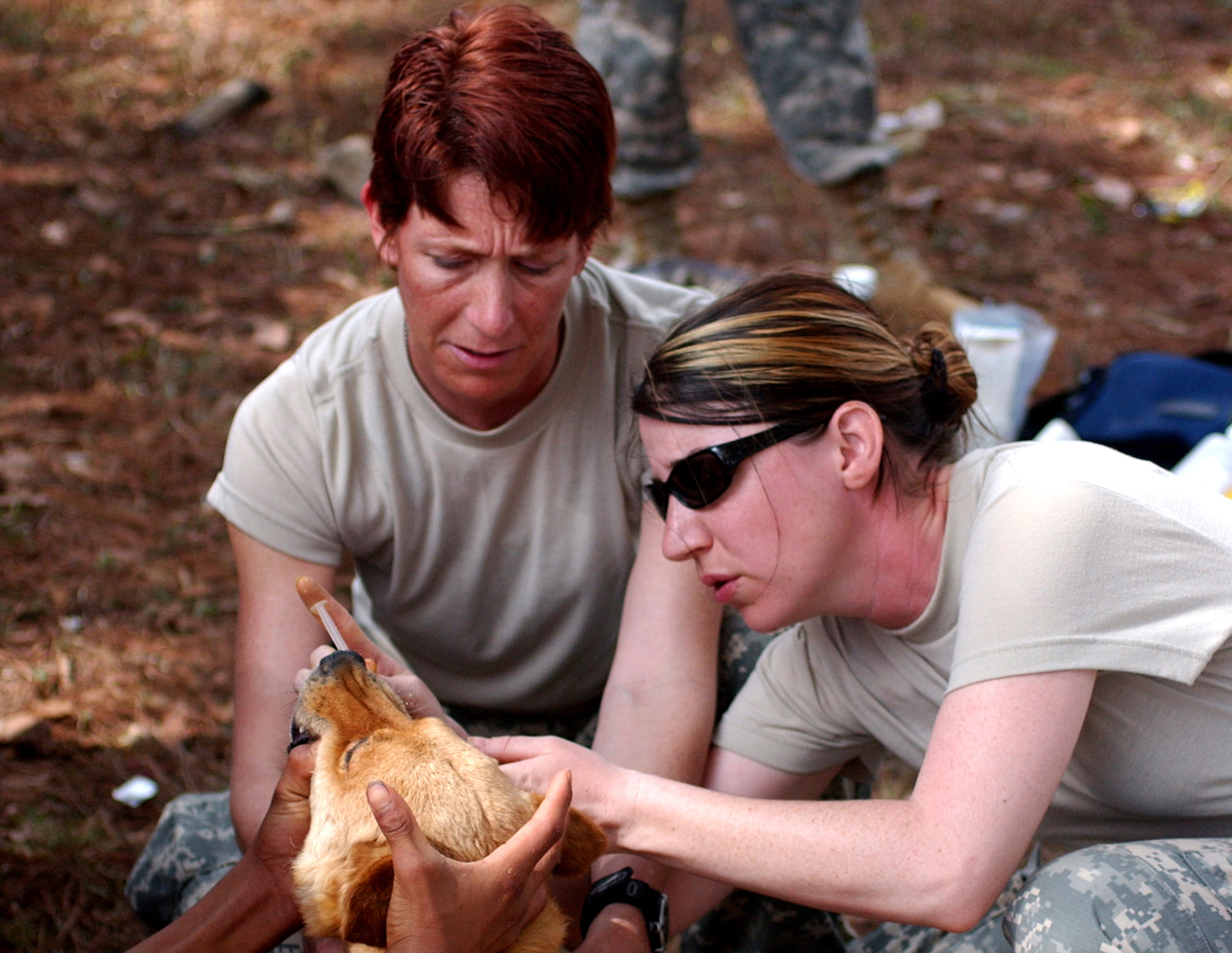
Figure 1

US, German, Spanish and Polish troops of the NATO enhanced Forward Presence battle groups with their tanks get ready for exercises in Adazi, Latvia. These 2018 exercises involved approximately 50,000 military personnel from 31 countries.

U.S. Marines from 3rd Marine Expeditionary force deployed from Okinawa, Japan, participate in the winter military training exercise with South Korean soldiers on January 28, 2016 in Pyeongchang-gun, South Korea. U.S. and South Korean marines participate in the endurance exercise in temperature below minus 20 degrees celsius under a scenario to defend the country from any possible attacks from North Korea. (Photo by Chung Sung-Jun/Getty Images)

U.S. High Mobility Artillery Rocket System (HIMARS) firing inside Ukraine. Photo obtained from Ukrainian Ministry of Defense/Twitter via Task and Purpose https://taskandpurpose.com/news/us-military-sending-atacms-missiles-to-ukraine-reports/

LAGUNA DEL RINCON, Honduras - Army Staff Sgt. Robyn Porter of the 478th Civil Affairs Battalion of Miami, Florida and Army Reserve Sgt. Mitzi Porter of the 993rd Medical Detachment (Veterinary Services) of Aurora, Colo. administer medication to a dog during their visit to this rural town. Veterinarians, like the two Porters, provided basic medical and dental care to dogs, cats and livestock during daylong visits to this and other remote Honduran villages. U.S. military medical personnel are in Honduras for the joint training exercise Beyond the Horizon. The event provides medical attention, as well as infrastructure renovation, to rural areas in this Central American country. (Photo by Sgt. Claude W. Flowers, 304th Public Affairs Detachment.)

Why do states cooperate?

Why do states cooperate?

Lots of reasons:

  • Balance against power/threat
  • Aggregate capabilities
  • Increase security
  • Signal credibility
  • Signal resolve
  • Facilitate power projection capabilities
  • Crisis intervention
  • Train host-state personnel
  • Field experience/training for US personnel
  • Humanitarian operations
  • Secure trade and investment relationships
  • Promote interoperability

Why do states cooperate?

Burden sharing

  • Distribute the costs of military operations

  • Defense

  • Offense

  • Deter Adversaries

  • Coordinate capabilities

Why do states cooperate?

Burden sharing: What it’s not

  • A point of conflict among NATO members in recent years

  • President Trump repeatedly criticized NATO for taking advantage of the US

  • Has pressed allies to give US more in exchange for “protection”

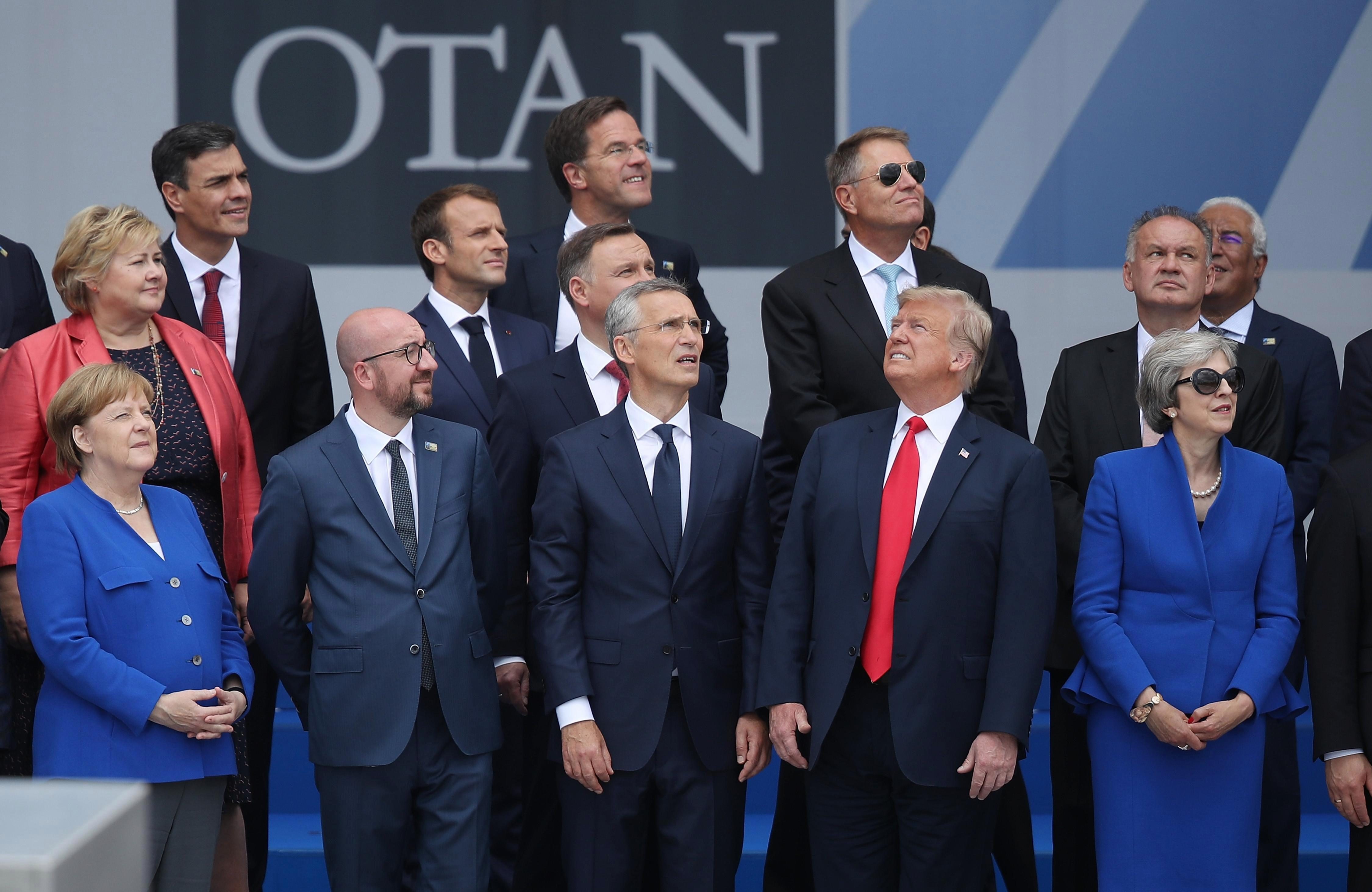
To right: President Trump at a NATO summit with other alliance member leaders in Brussels, 2018.
Why do states cooperate?

Influence and control

  • Most alliances are asymmetric alliances

  • Security ties can allow members to exert influence on other member states

  • Example: NATO

    • Intended to deter Russian aggression

    • Also intended to facilitate cooperation among European countries

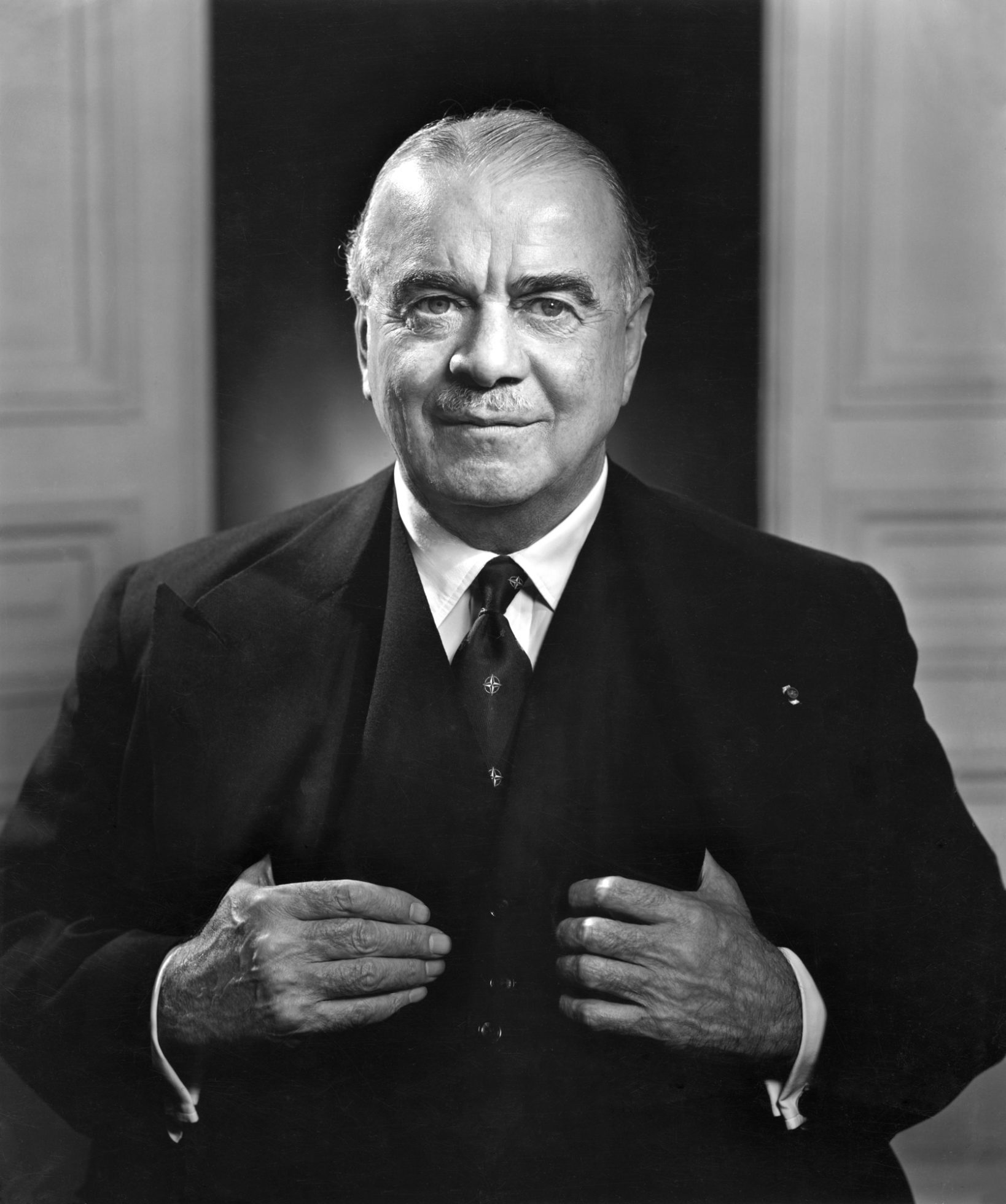
To right: Lord Hastings Lionel Ismay, first Secretary General of NATO
Why do states cooperate?

So what does this look like?

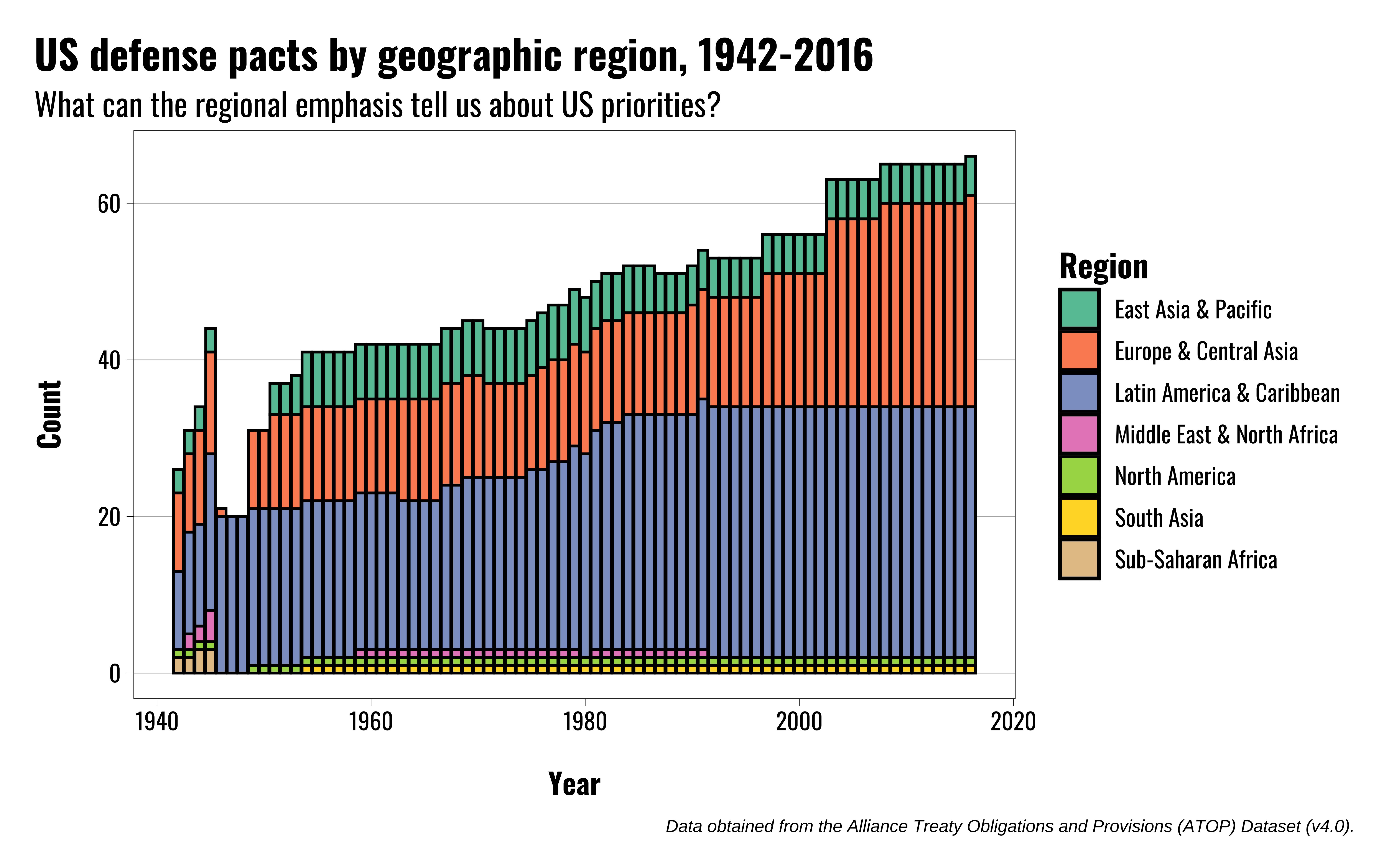
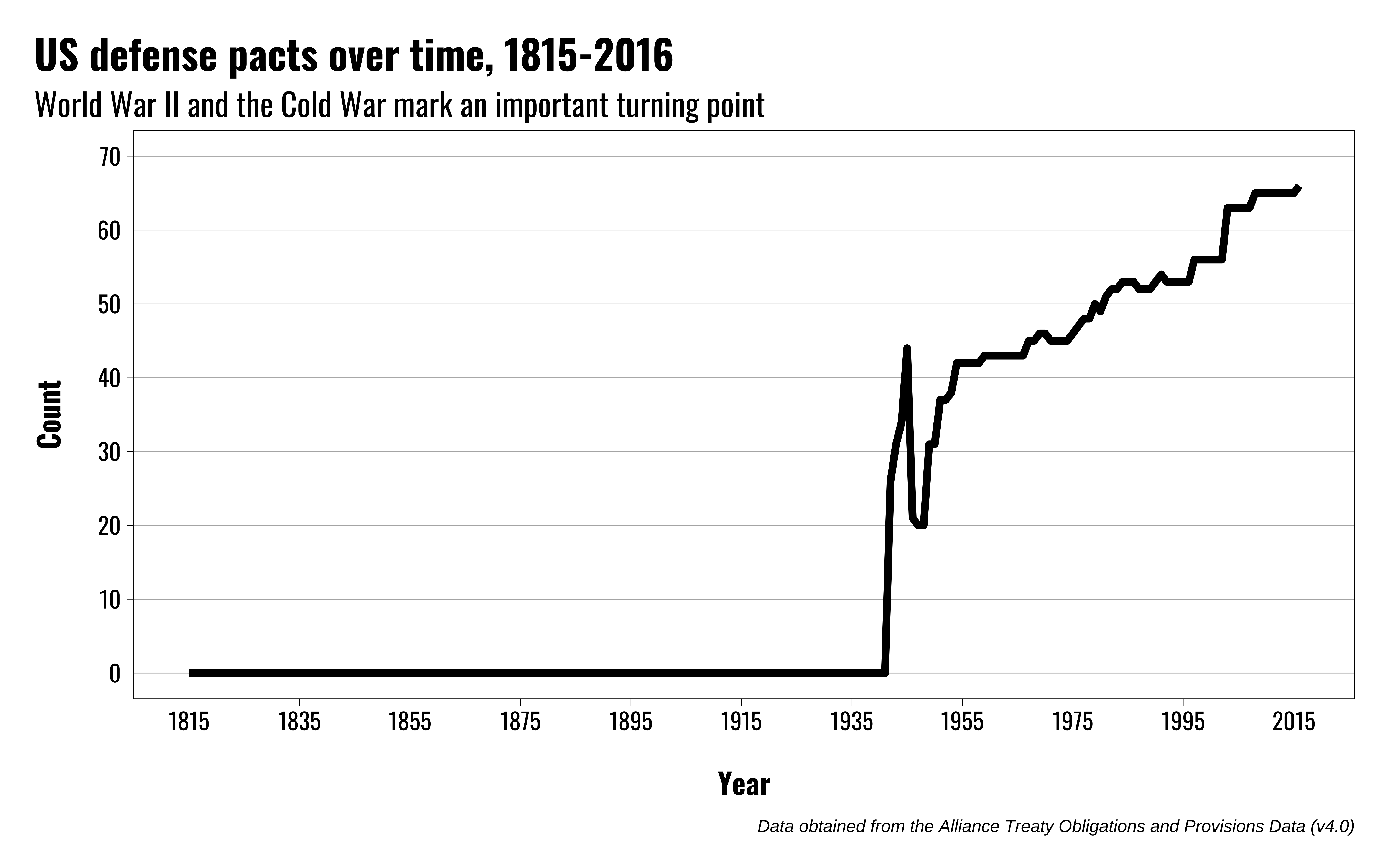
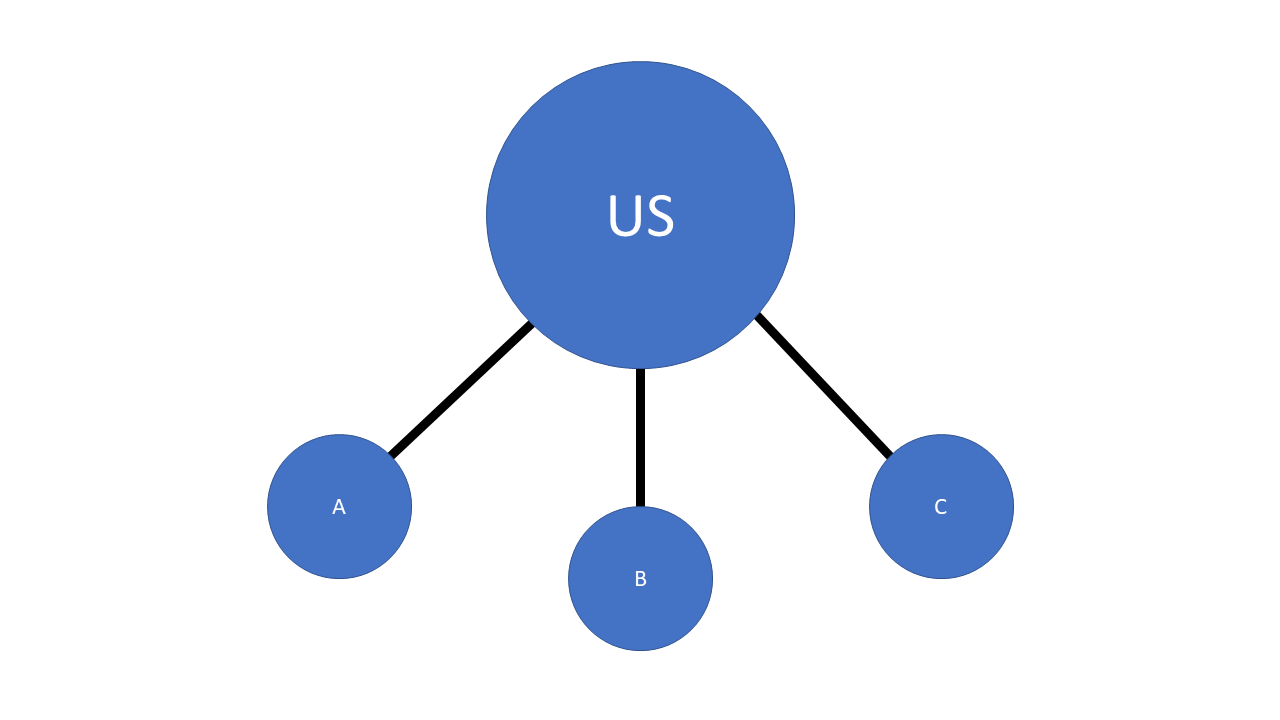
  • The US has alliance agreements with a lot of different countries

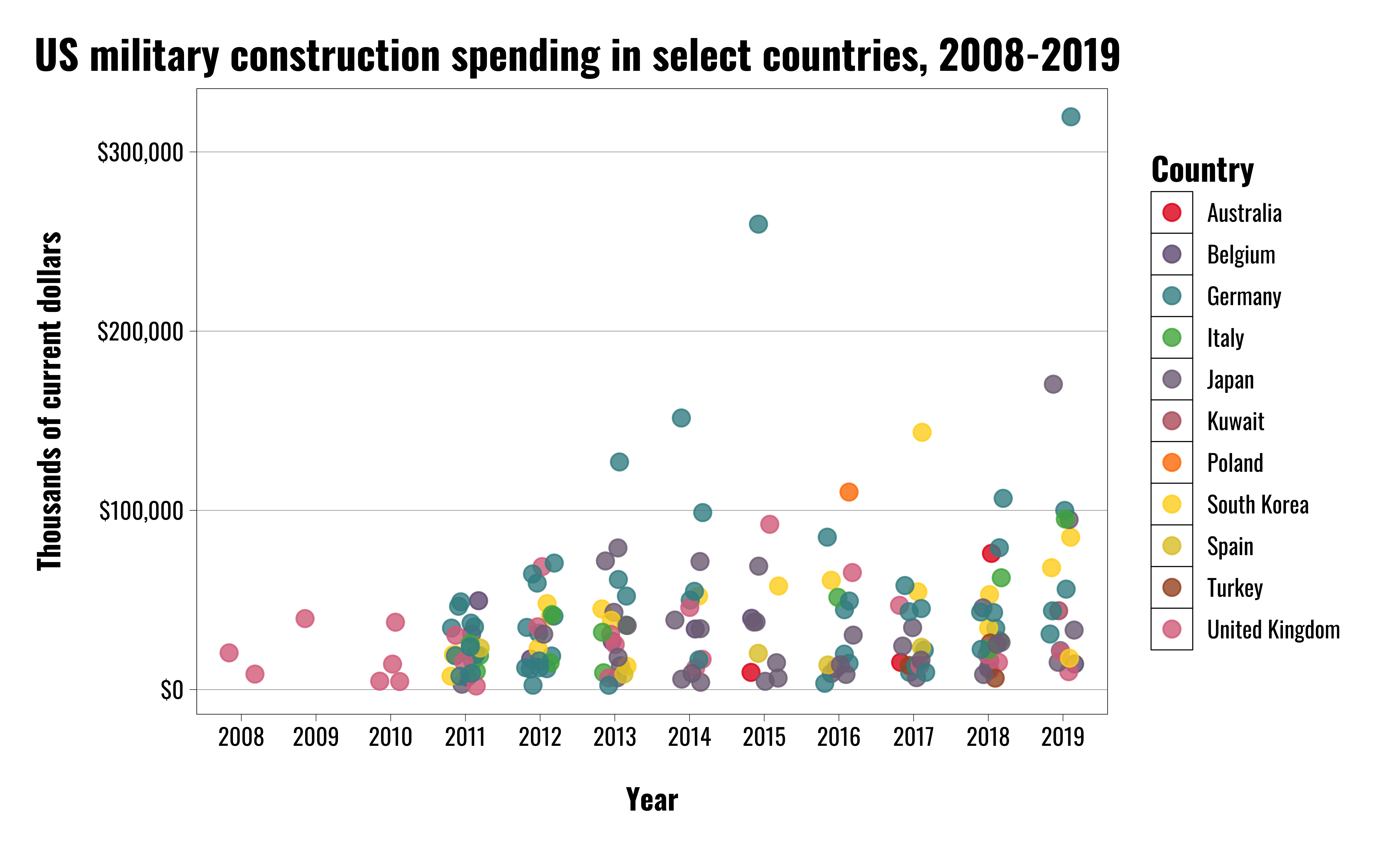
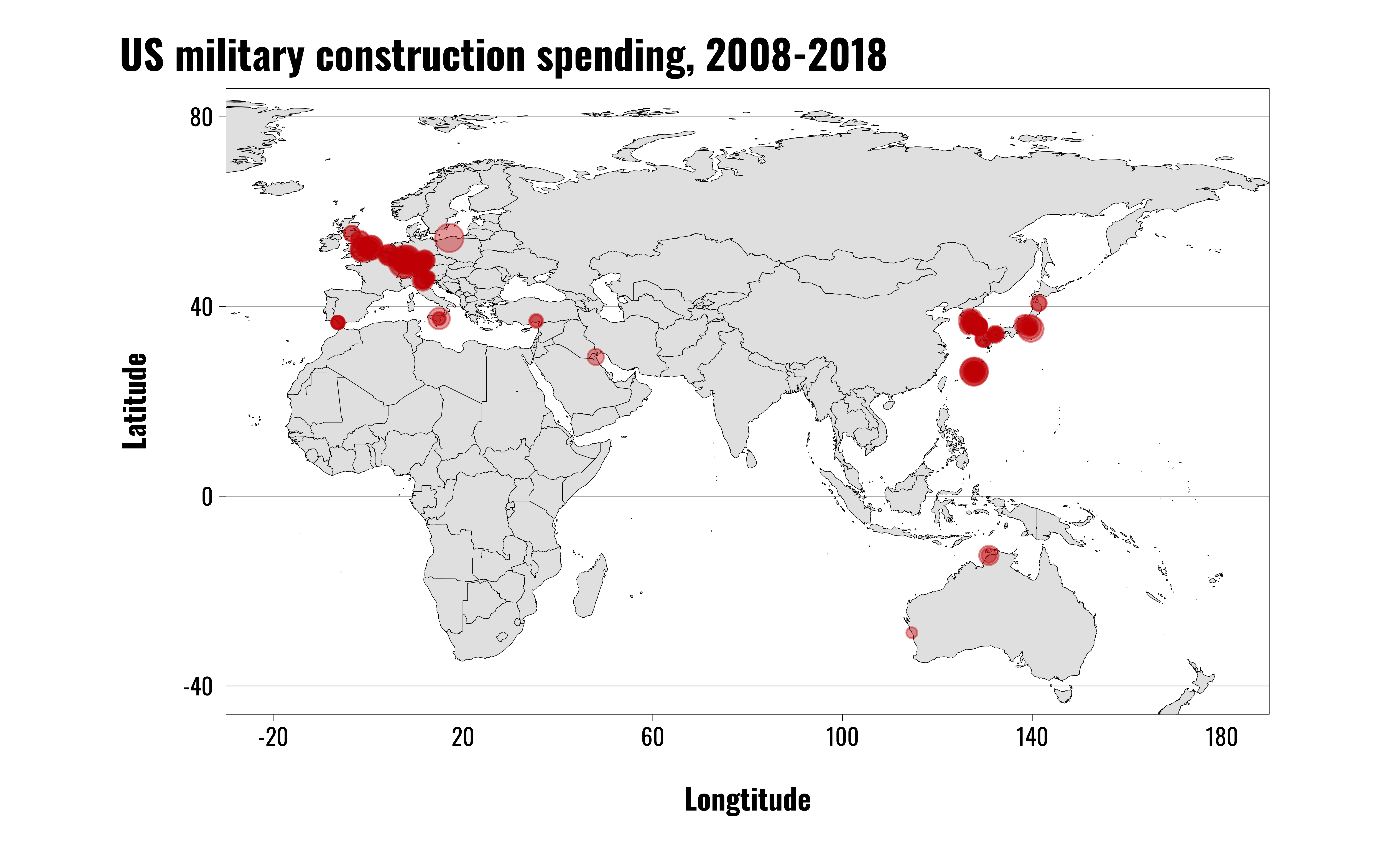
  • As a part of these agreements the US often gets access to territory for things like military bases

  • Alliance agreements might also be used to shape other states’ security policies in related areas

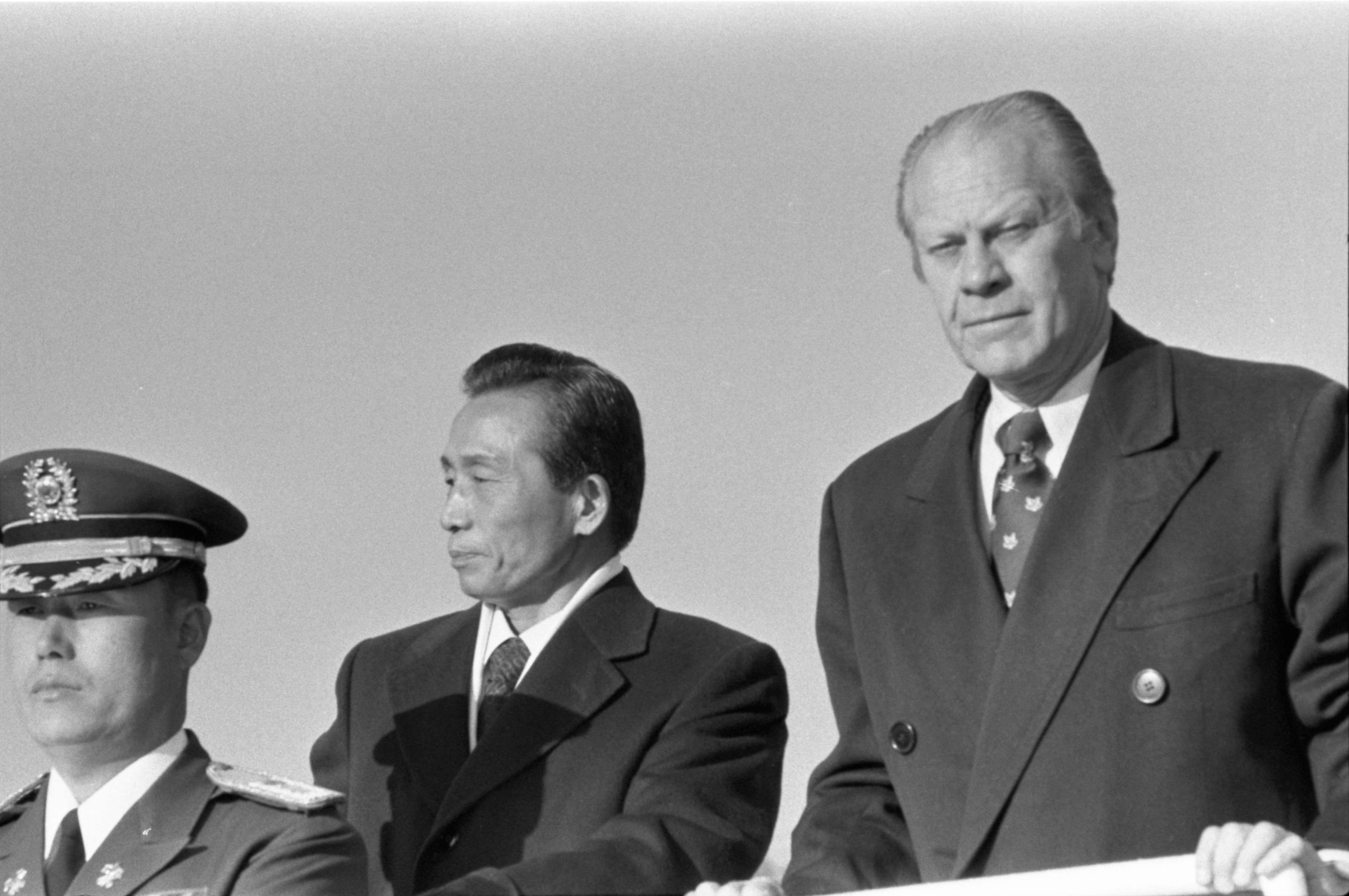
To right: President Gerald Ford with South Korean President Park Chung-hee in Seoul, 1974. Photo courtesy of George Washington University National Security Archives.
Effects of security cooperation

Effects of security cooperation

Security cooperation has effects across a number of dimensions

  • Security effects

  • Economic effects

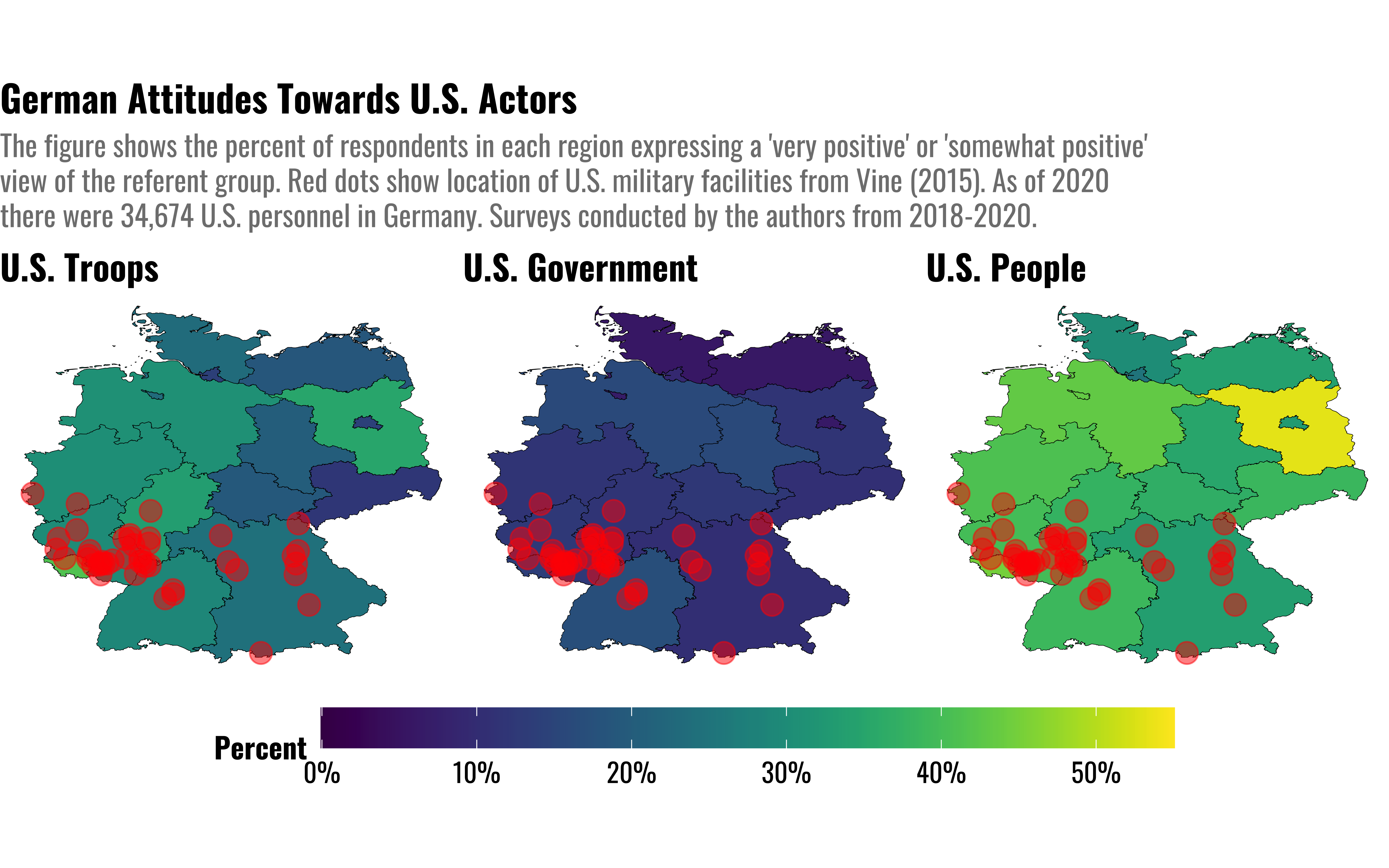
  • Public opinion

Effects of security cooperation

Security Effects

  • Reduced military spending (for most) and a smaller host-state military

  • Effect is also context-dependent

  • Some increased likelihood of conflict

Effects of security cooperation

Issue Linkage

  • Security cooperation doesn’t just serve security goals

  • Alliances and deployments are related to a broader range of states’ policy goals

  • Security relationships affect economic and political relationships

  • But economic and political relationships also affect security relationships

Effects of security cooperation

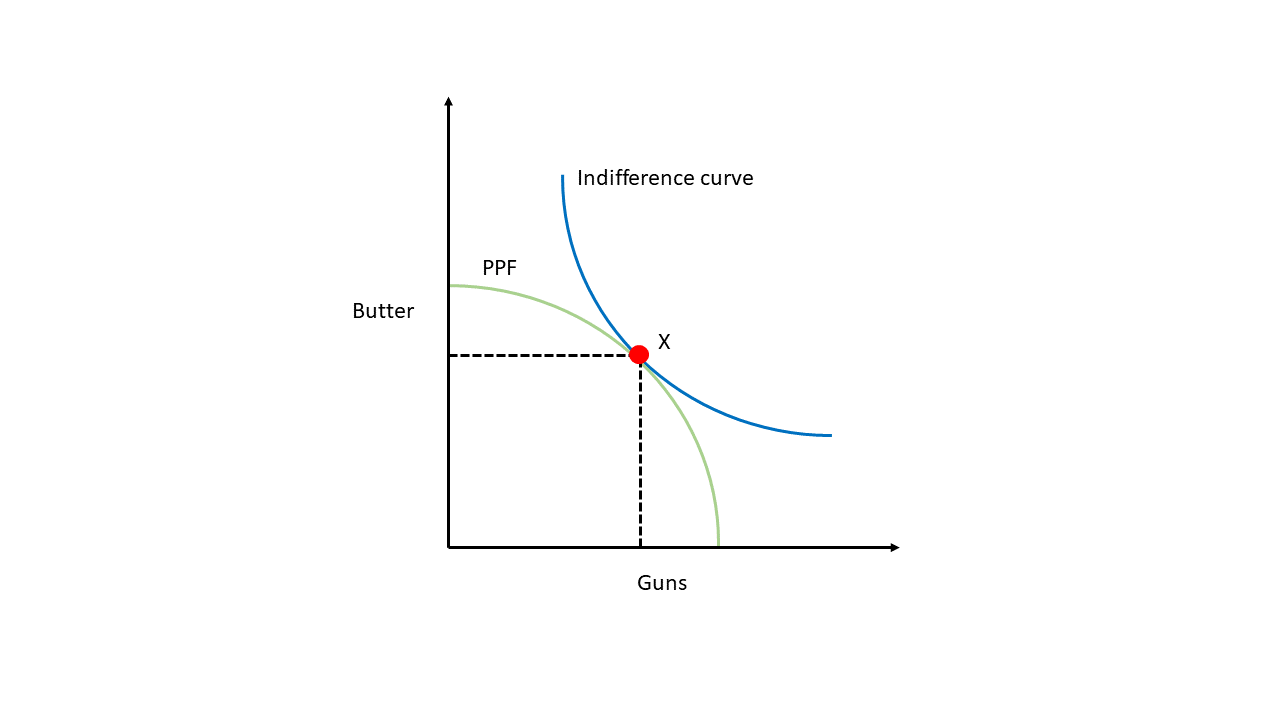
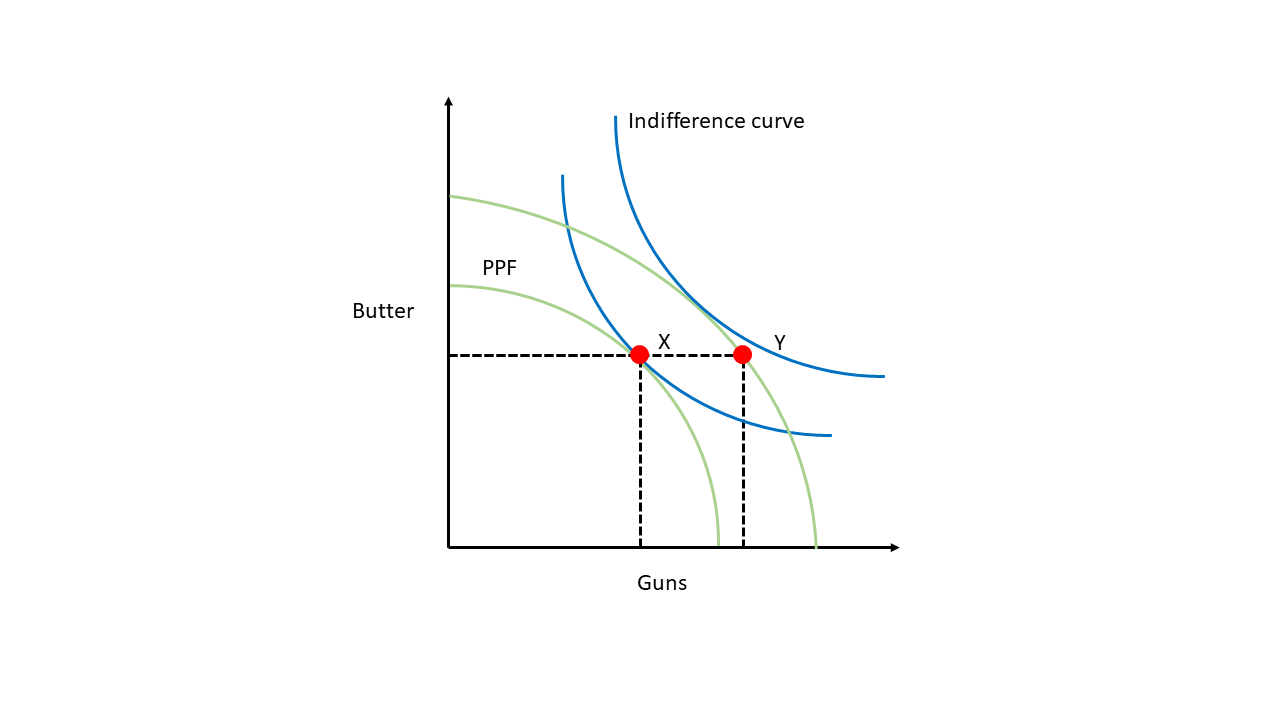
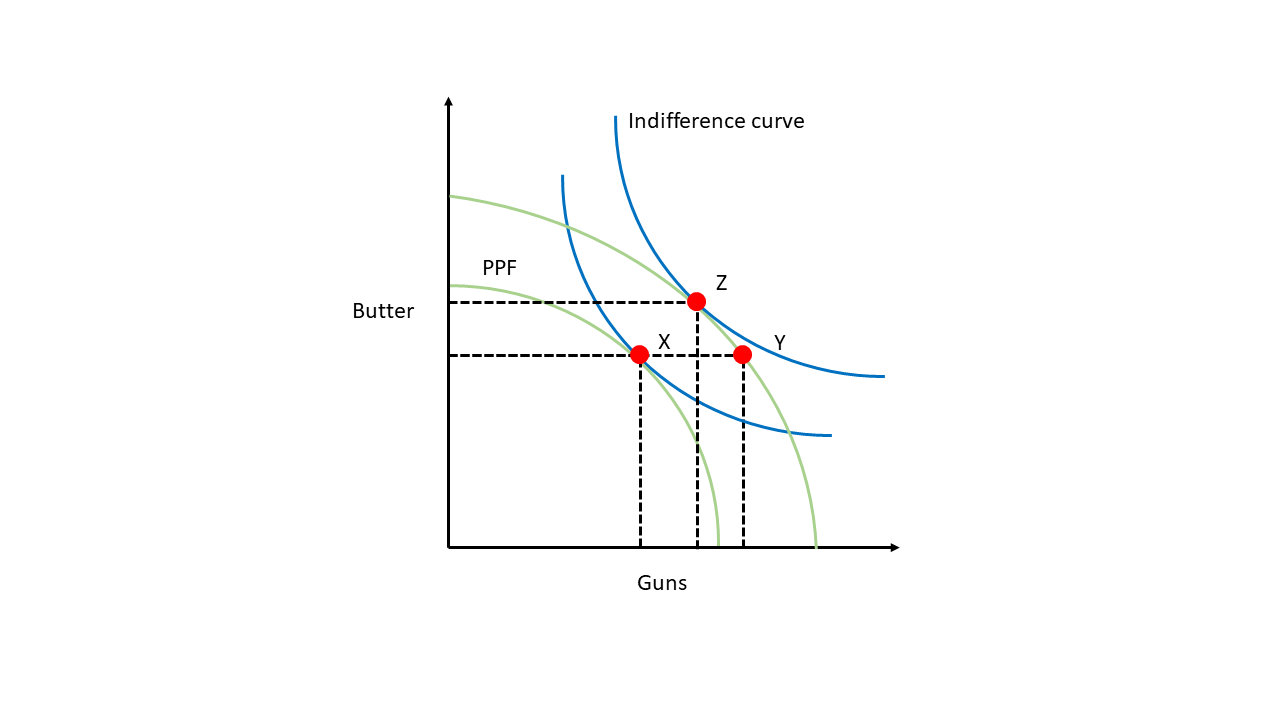
“Guns vs Butter” framework

  • States have things they want to do, but have limited resources

  • This means they have to strike a balance, or mixture, of policy outputs with those limited resources

  • Allied state gives up some control over its foreign policy for greater security

  • This lets the allied state shift resources away from defense to other policy areas while not reducing overall policy outputs

Effects of security cooperation

Economic effects

Evidence of:

  • Higher economic growth
  • Higher infrastructure growth
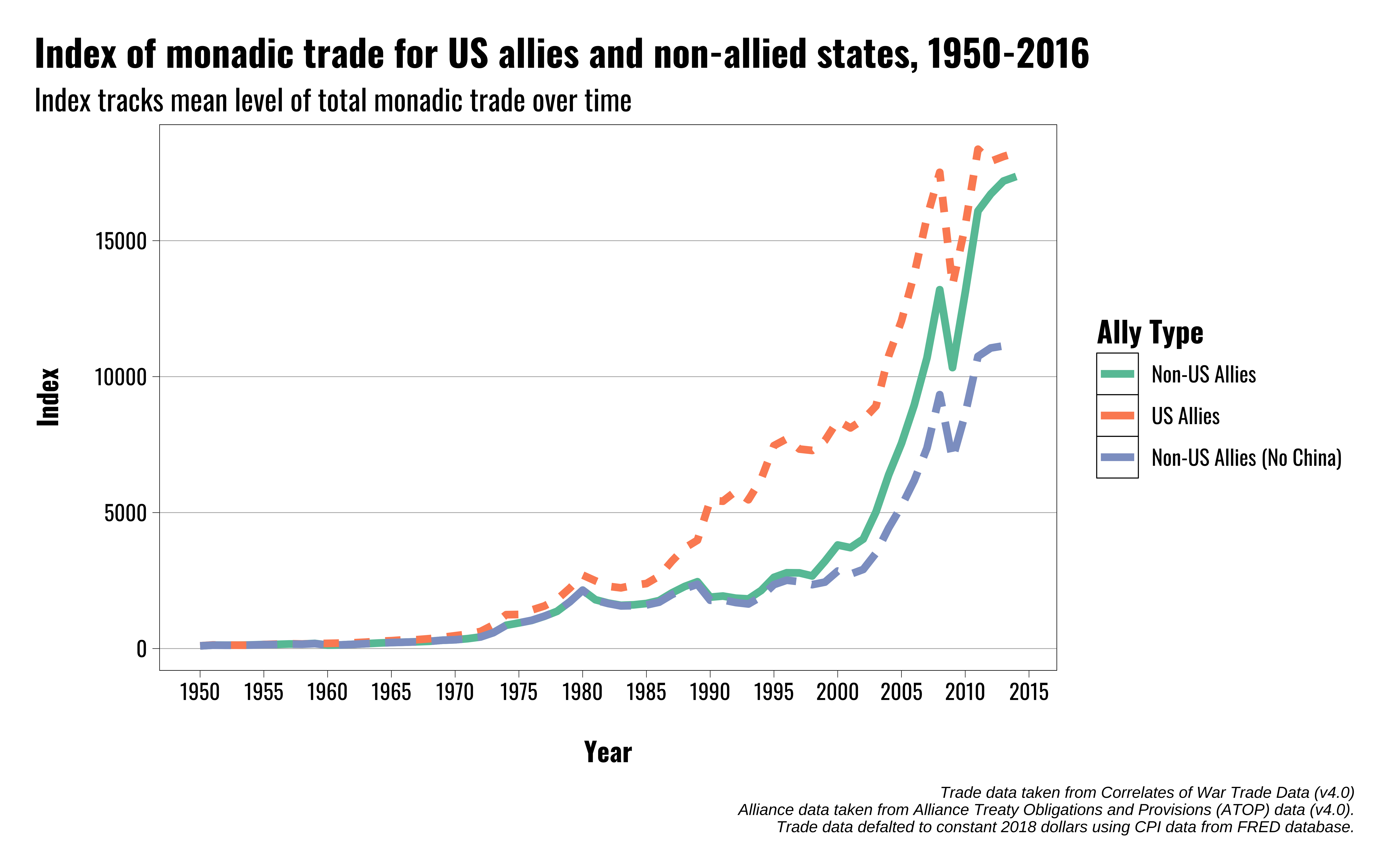
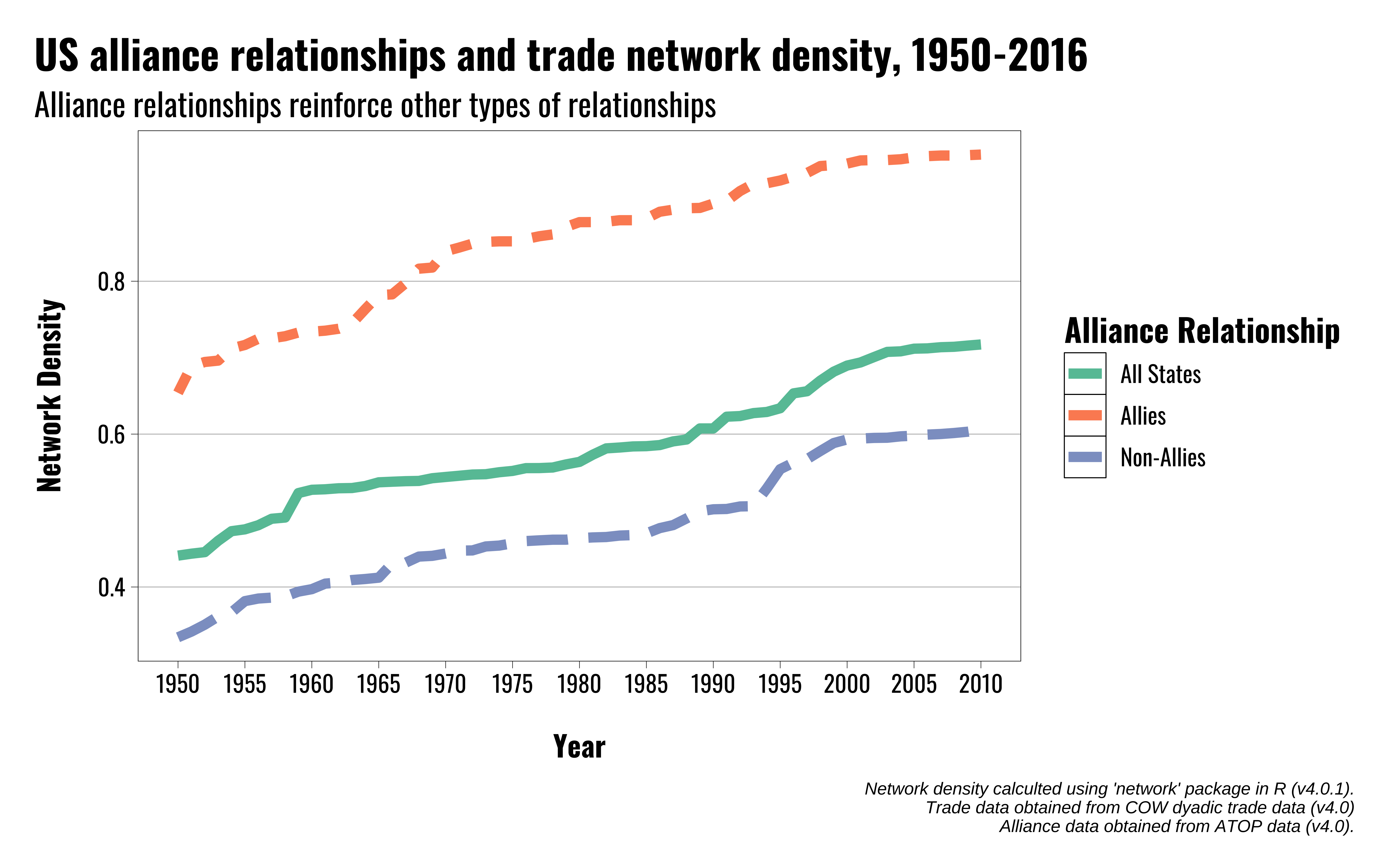
  • Higher levels of trade between US and host country
  • Higher levels of FDI into host country
  • Evidence of increased trade between third-party states

Effects of security cooperation

Economic effects

So what’s the causal link?

  1. Deployments signal stability, prompting investment?
  2. Diffusion of technology and expertise?
  3. Increasing demand by increasing consumer pool?

Effects of security cooperation

  • Positive externalities

    • Security?
    • Investment?
    • Jobs?
  • Negative externalities

    • Moral hazard?
    • Crime?